For many businesses, scaling feels like trying to upgrade an airplane while it’s already mid-flight. The excitement of rapid expansion is often dampened by the “growing pains” of disconnected systems, manual workarounds, and a sudden, unsettling loss of visibility into daily operations. When the tools that got you to where you are today start holding you back, it’s a clear sign that growth without a strategy is just a recipe for chaos.
True success isn’t just about getting bigger; it’s about getting better at managing that size. Oracle NetSuite provides the unified infrastructure needed to turn that chaotic expansion into a streamlined, predictable success story. By integrating every corner of your business into a single source of truth, it offers more than just software—it offers the Smart Control necessary to empower your growth and clear the operational fog. In this article, we explore how to bridge the gap between where your business is and where it’s going.

The Growth Paradox: Why Manual Systems Fail as You Scale
Welcome to the first major step in your journey toward smarter business growth. Scaling a company is an exciting achievement. However, many leaders face a strange phenomenon called the Growth Paradox. This happens when the very success that helped your company grow starts to create new, difficult challenges. When you were small, simple tools like basic spreadsheets and paper notes worked perfectly. They were cheap and easy to use. But as your team grows and your customers increase, these manual methods can become a heavy weight.
In this section, we will explore why old habits often break under the pressure of new success. We will look at how moving toward a “Smart Control” system like NetSuite transforms these growing pains into opportunities for even greater achievement.
1. The Hidden Breaking Point of Spreadsheets
In the early days of a business, a spreadsheet is like a Swiss Army knife. It is versatile and familiar. You use it for tracking sales, managing inventory, and keeping lists of customers. However, as you scale, spreadsheets reach a “hidden breaking point.” This occurs when the volume of data becomes too large for a human to manage without making mistakes.
When multiple people try to update the same file, you encounter a problem called Version Control issues. This is a fancy way of saying that nobody knows which file is the most recent or accurate one. One person might be looking at “Sales_Final,” while another is looking at “Sales_Final_v2.” This leads to confusion and slow progress.
Manual data entry also introduces the risk of human error. A single mistyped number in a cell can change your entire financial report. Instead of spending time on creative strategy, your talented team spends hours hunting for “broken formulas.” Moving to a smart system allows your team to trust their data again. It replaces the “breaking point” with a solid foundation.
Table: Small Scale vs. Growth Scale Spreadsheet Use
| Feature | Small Scale (Manual) | Growth Scale (Smart System) |
| Data Entry | Manual typing (High error risk) | Automatic syncing (Accurate) |
| File Access | One person at a time | Entire team sees updates instantly |
| Security | Hard to track who changed what | Clear history of all actions |
| Speed | Slows down as rows increase | Remains fast regardless of size |
2. The High Cost of “Information Silos”
As a company grows, it naturally divides into departments like Sales, Accounting, and Warehouse. If these departments use different manual tools, they often create Information Silos. An Information Silo is a situation where one group of people has important information that other groups cannot see or access.
Imagine your Sales team promises a customer a product because their private list says it is in stock. Meanwhile, the Warehouse team knows the item is sold out, but they haven’t updated the Sales team yet. This lack of communication creates frustrated customers and stressed employees. These silos act like walls that block the flow of your business.
To fix this, you need a “Single Source of Truth.” This means every department looks at the exact same data at the exact same time. When the Warehouse ships a box, the Sales team and the Accounting team see that change instantly. This connectivity builds a positive culture where everyone works together toward the same goal. It replaces internal friction with total harmony.
The “Silo Symptom” Checklist:
- Teams spend a lot of time in meetings just to share basic updates.
- Reports from different departments don’t match each other.
- Customers have to repeat their information to different staff members.
- Employees feel frustrated because they lack the “big picture.”
3. The Heavy Burden of “Manual Workflows”
A Workflow is simply the series of steps your team takes to finish a task. For example, a “Billing Workflow” might involve checking an order, typing an invoice, emailing it to the customer, and then recording the payment. When you are small, doing this manually is easy. But when you have hundreds of orders, these manual steps become a heavy burden.
Manual workflows are slow because they rely on human memory and physical actions. If a manager is busy or out of the office, a paper document might sit on their desk for days. This creates a “bottleneck.” A Bottleneck is a point in a process where work gets stuck, slowing down everything else behind it.
Smart systems like NetSuite turn these manual chores into Automated Workflows. This means the software handles the repetitive steps for you. Instead of a person typing an invoice, the system generates it the moment a sale is made. This gives your team the freedom to focus on things that truly matter, like building relationships and inventing new products. It changes your office from a place of “paper-pushing” to a place of “value-creating.”
How Automation Brightens Your Day:
- Saves Time: Tasks that took hours now take seconds.
- Reduces Stress: No more worrying about forgotten emails or lost files.
- Consistency: Every customer gets the same high-quality service every time.
- Growth: You can handle ten times the work without hiring ten times the staff.
4. Decisions in the Dark: The Missing View
Making business decisions without real-time data is like driving a car at night without headlights. You might know where you were five miles ago, but you can’t see what is right in front of you. Manual systems rely on “lagging indicators.” This is information about things that have already happened in the past, like a monthly report that arrives two weeks late.
By the time you see a problem in a manual report, it might be too late to fix it. If costs went up last month, you already lost that money. To grow smartly, you need Real-time Visibility. This means you can see exactly what is happening in your business at this very second. You can see your bank balance, your top-selling items, and your team’s progress on a digital dashboard.
Having this “Smart Control” allows you to be proactive rather than reactive. You can spot a trend early and take advantage of it. You can see a small issue before it becomes a big disaster. This clarity brings a sense of peace and confidence to leadership. You are no longer guessing; you are leading with facts.
Benefits of Real-time Insight:
- Faster Pivoting: Change your strategy quickly based on today’s numbers.
- Better Cash Flow: See exactly when money is coming in and going out.
- Confidence: Feel sure about your choices because the data supports you.
5. Building a Foundation for Limitless Expansion
The final piece of the Growth Paradox is realizing that your old tools are not just slow; they actually stop you from reaching your full potential. If you want to build a skyscraper, you cannot use the foundation of a small cottage. To achieve lasting success, you must upgrade your foundation to something that supports Scalability.
Scalability is the ability of your business system to grow as large as you want without breaking or becoming too expensive. A manual system is not scalable because it requires more and more people to do the same amount of work. Eventually, you run out of space, time, or money. A smart, cloud-based system like NetSuite is built to expand with you. Whether you have ten employees or ten thousand, the system stays strong and organized.
Choosing to move away from manual systems is a positive act of courage. It shows that you believe in the future of your company. It proves that you are ready to stop “surviving” the growth and start “thriving” in it. By embracing Smart Control, you remove the limits on what your business can achieve. You turn the Growth Paradox into a Growth Engine.
The “Smart Growth” Advantage:
- Flexibility: Easily add new products or locations.
- Global Reach: Handle different currencies and languages automatically.
- Sustainability: Build a business that lasts for generations.
- Modernity: Use the same powerful tools that the world’s most successful companies use.
A Unified Foundation: Breaking Down Data Silos with NetSuite
In the previous section, we learned about the “Growth Paradox” and how manual systems can slow down a successful business. Now, we will look at the solution. The most powerful way to fix a growing business is to create a Unified Foundation. Imagine building a house where every brick is connected perfectly to the others. That is what Oracle NetSuite does for your company. It takes all the different parts of your business and brings them into one single, happy home.
This section explains how NetSuite breaks down the “walls” between your departments. By doing this, it helps everyone work together with more energy and less stress. Let’s explore how this foundation changes everything.
1. The Magic of a Single Source of Truth
The most important concept in a modern business is the Single Source of Truth. This sounds like a big title, but it is actually a very simple idea. It means that there is only one master version of your business data. In many companies, the Sales team has one list of customers, while the Accounting team has another list. If a customer changes their address, one list might get updated while the other stays old. This creates a “double truth,” which leads to mistakes.
With NetSuite, there is only one “book” that everyone reads from. If a salesperson updates a phone number, the Accounting team sees that change immediately. There is no need to send emails or make phone calls to check if the information is correct. This creates a sense of Data Harmony. When everyone trusts the numbers, the whole office feels more positive. You stop arguing about whose report is right and start focusing on how to serve your customers better.
Table: One Truth vs. Many Truths
| Situation | Multiple Systems (Old Way) | Single Source (NetSuite) |
| Updating a Price | Must change it in 5 different files. | Change it once; everyone sees it. |
| Checking Stock | Call the warehouse and wait. | Check your screen instantly. |
| Trust Level | High doubt and frequent errors. | Complete confidence in data. |
| Speed | Slow and frustrating. | Fast and empowering. |
2. Connecting Every Room in Your Business
Think of your company as a large building with many rooms. You have a Sales room, a Finance room, and an Inventory room. In a manual system, these rooms have no doors. If someone in the Sales room needs information from the Finance room, they have to climb out a window and run around the building. This is what we call Disconnected Systems. It wastes a lot of time and energy.
NetSuite acts like a hallway that connects all these rooms. It uses Integration, which means it makes different software parts work together as one. When a salesperson clicks “Sell,” the system automatically tells the Inventory room to pack the box and tells the Finance room to send a bill. This connection happens behind the scenes. Your team doesn’t have to do any extra work to make it happen.
The Connected Benefits List:
- Teamwork: People feel more like a team when they share information easily.
- Fewer Mistakes: You don’t have to type the same thing twice, so errors disappear.
- Happy Customers: Orders move faster because the “hallways” are open.
- Clear Goals: Everyone can see how the whole company is doing, not just their room.
3. Real-Time Clarity: Seeing the Whole Picture
To manage a growing company, you need to see what is happening Real-Time. Real-time means that information is updated at the exact second a change occurs. In the old way, a manager might have to wait until the end of the month to see a “Financial Statement.” This is a document that shows how much money was made and spent. Waiting 30 days to see your progress is like looking in a rearview mirror while driving.
NetSuite gives you a “Digital Dashboard.” This is a screen that shows you colorful charts and numbers that change throughout the day. If a big sale happens at 10:00 AM, your dashboard shows your rising profit at 10:01 AM. This is very exciting! It gives you the power to celebrate wins as they happen. It also helps you spot small problems before they grow into big ones.
Why Real-Time Information is a Superpower:
- Fast Decisions: You can act quickly because you have the facts right now.
- Accuracy: You are looking at what is happening today, not what happened last month.
- Peace of Mind: You never have to wonder “How are we doing?” because the answer is always on your screen.
4. Making the Software Do the Heavy Lifting
One of the best parts of a unified foundation is how it handles the “boring” tasks. Many employees spend their days doing Manual Data Entry. This means they are just typing information from one system into another. This is not very fun work, and it often leads to mistakes. NetSuite uses Automation to do this work for you. Automation is like having a helpful robot that handles the repetitive chores.
When your systems are unified, the software “talks” to itself. For example, when a customer pays a bill online, NetSuite automatically records the payment and updates the customer’s account. No human needs to type anything. This is a very positive change for your employees. Instead of being “data typists,” they can become “problem solvers.” They can spend their time talking to customers or coming up with new ideas to help the business grow.
A Day in the Life: Manual vs. Automated
- Manual Morning: Type 50 invoices, check 20 emails for stock updates, fix 5 errors. (Stressful!)
- Automated Morning: Review the “Success Dashboard,” call 3 key customers to say hello, plan a new marketing campaign. (Productive and Happy!)
Using automation doesn’t mean you need fewer people. It means your people can do more important and more satisfying work. This leads to a much better company culture.
5. A Strong Foundation for Your Future
Finally, a unified foundation is about building something that lasts. When you use small, separate tools, you are always worried that they will “break” if you get too many customers. This is like building on sand. NetSuite provides a Scalable Foundation. As we mentioned before, scalability is the ability to grow bigger without any trouble.
Because NetSuite lives in the Cloud, it is very strong and flexible. “The Cloud” simply means that the software and your data are kept on very powerful, secure computers that you access over the internet. You don’t have to buy expensive servers or hire a big team to fix computers. NetSuite handles the technical parts, so you can handle the business parts.
Building Your Legacy:
- No Limits: You can add 1,000 more customers tomorrow, and the system will handle it easily.
- Work Anywhere: Since it is in the cloud, you can see your business from your office, your home, or even on a trip.
- Security: Your information is protected by the best security technology in the world.
- Confidence: You can tell your team and your investors that you are ready for any level of success.
By breaking down the silos and building this unified foundation, you are giving your company a gift. You are moving from a world of confusion to a world of clarity. This is the “NetSuite Way” to smart control.
Real-Time Visibility: Seeing Through the Fog of Rapid Expansion
Growing a business is much like climbing a high mountain. As you go higher, the view should get better. However, many business owners find that the faster they climb, the thicker the “fog” becomes. This fog is made of missing information, late reports, and confusing numbers. Without a clear view, it is easy to take a wrong turn. Oracle NetSuite acts like a powerful set of binoculars, clearing the fog and showing you exactly where you stand at every moment.
In this section, we will explore how real-time visibility transforms your leadership. You will learn how to stop guessing and start knowing. With the right tools, you can see every detail of your business with perfect clarity.
1. The Blindfold of Rapid Growth
When your company is small, you can see everything. You know every customer by name and every item on the shelf. But as you scale, you can no longer be everywhere at once. You begin to rely on reports to tell you what is happening. The problem with manual reports is that they are “Lagging Indicators.” A Lagging Indicator is information about something that has already happened in the past.
Imagine trying to drive a car while only looking at the rearview mirror. You can see where you have been, but you cannot see the obstacles in front of you. If you only receive your financial reports at the end of the month, you are making decisions based on old news. If your costs were too high three weeks ago, that money is already gone. This delay creates a “Visibility Gap.”
Closing this gap is the first step to smart control. Instead of waiting for the fog to clear at the end of the month, you need a system that shows you the road right now. This shift from “past-view” to “now-view” changes your role from a person who fixes old mistakes to a leader who creates new successes. It removes the stress of the unknown and replaces it with the joy of constant awareness.
Table: The Difference Between Old Reports and Real-Time Visibility
| Feature | Old Manual Reports | Real-Time Visibility (NetSuite) |
| Timing | Weekly or Monthly | Updated every second |
| Accuracy | Often contains human errors | Pulls directly from live data |
| Focus | Looking at the past | Looking at the present |
| Action | Reactive (fixing mistakes) | Proactive (preventing mistakes) |
2. The Command Center: Real-Time Dashboards
To see through the fog, you need a central place where all your information comes together. In NetSuite, this is called a Dashboard. Think of a dashboard like the control panel in an airplane. It has gauges, lights, and charts that tell the pilot exactly how the plane is performing. A business dashboard does the same thing for your company. It displays your most important numbers in a way that is very easy to understand.
These important numbers are often called KPIs, which stands for Key Performance Indicators. A KPI is a “vital sign” for your business, just like your heart rate or blood pressure is a vital sign for your health. A KPI might show your total sales for the day, your current bank balance, or how many orders are waiting to be shipped.
The beauty of a real-time dashboard is that it is visual. You don’t have to read long lists of numbers to know how you are doing. You can see a green arrow pointing up for a win, or a red light for something that needs your attention. This gives you a feeling of “Smart Control.” You can check your business while having your morning coffee and know exactly what your team needs to focus on that day. It turns complex data into a simple, positive story of growth.
Common KPIs to Track on Your Dashboard:
- Total Revenue: How much money is coming in right now.
- Inventory Levels: Knowing exactly what is on the shelf.
- Customer Satisfaction: Seeing feedback as it arrives.
- Profit Margins: Ensuring your growth is actually making money.
3. Spotting Trouble Before It Happens
One of the greatest benefits of visibility is the ability to be Proactive. Being proactive means taking action to prevent a problem before it actually happens. In a “foggy” business, you are usually Reactive, which means you only act after a problem has already caused damage.
Imagine you are running a sale on a popular product. In a manual system, you might not realize you are running out of stock until the shelf is empty and customers are disappointed. With NetSuite’s real-time visibility, you can see your stock levels dropping live on your screen. You can see the “trend” and order more items before you ever run out.
This level of control allows you to identify Bottlenecks instantly. As we mentioned before, a bottleneck is a place where work gets stuck. Perhaps orders are moving slowly through the shipping department. In a manual world, you might not notice this for days. In NetSuite, you will see a “pile up” of orders on your dashboard. You can quickly move more staff to that department to help. This keeps your customers happy and your team feeling supported. It creates a positive environment where everyone is working together to keep the business moving smoothly.
The Proactive Leadership Checklist:
- Monitor Trends: Look for patterns in sales or costs.
- Set Alerts: Have the system notify you if a number goes too high or too low.
- Address Bottlenecks: Clear the path for your team as soon as you see a slowdown.
- Celebrate Wins: Use live data to congratulate your team the moment they hit a goal.
4. The Power of the “Drill-Down”
Having a big-picture view is wonderful, but sometimes you need to see the tiny details to understand “why” something is happening. NetSuite provides a feature called Drill-Down. This is a very simple but powerful tool. If you see a number on your dashboard that looks interesting or unusual, you can simply click on it. The system will then show you the smaller pieces of data that make up that number.
For example, imagine your dashboard shows that your expenses are higher than usual this week. Instead of guessing why, you “drill down” by clicking the expense number. The system might show you that a specific department bought new equipment. You can click again to see the exact receipt for that equipment. You have gone from a “big picture” to a “tiny detail” in just two clicks.
This eliminates the need for “investigation meetings” where you have to ask your staff to go find information for you. You have all the answers at your fingertips. This saves everyone time and prevents frustration. It also makes your team more accountable. When everyone knows the data is visible and clear, they tend to be more careful and accurate in their work. It builds a culture of honesty and clarity, which is essential for any company that wants to scale smartly.
Why “Drill-Down” Ability Matters:
- Saves Time: No more digging through paper files or separate software.
- Provides Context: Understand the story behind the numbers.
- Empowers Managers: Give your department heads the tools to investigate their own areas.
- Eliminates Guesswork: Decisions are based on hard evidence, not feelings.
5. Clear Skies Ahead: Smart Planning and Forecasting
The final stage of seeing through the fog is using your data to look into the future. This is called Forecasting. Forecasting is the process of using your current and past data to make a “smart guess” about what will happen next. While nobody has a crystal ball, having real-time data makes your predictions much more accurate.
When you have a unified foundation and real-time visibility, your forecasts are not just hopes; they are based on reality. You can see how much you sold last summer and compare it to your current growth rate. This helps you plan for the upcoming months. You can decide with confidence when to hire new people, when to launch a new product, or when to move to a larger office.

Planning with confidence is a very positive experience. It removes the “fear of the future” that many business owners feel. Instead of being worried about what might happen, you feel prepared for what will happen. You are no longer just surviving the expansion; you are steering it. This is the ultimate goal of “Scaling Smarter.” By using the light of real-time data to clear the fog, you ensure that your journey up the mountain is safe, successful, and full of clear views.
The Benefits of Smart Forecasting:
- Financial Safety: Ensure you always have enough cash for your future plans.
- Resource Planning: Know exactly how many staff members you will need next season.
- Goal Setting: Set realistic and exciting targets for your team to hit.
- Investor Confidence: Show banks and partners that you have a clear plan for success.
Strengthening the Reins: Achieving Ironclad Operational Control
In our journey so far, we have discussed how to find more speed and better visibility. But with great speed comes the need for great steering. Imagine a powerful horse running at full gallop. Without strong “reins,” the rider might lose control. In business, “Operational Control” acts as those reins. It ensures that as your company grows faster and larger, it stays on the right path.
Oracle NetSuite provides the digital tools to strengthen these reins. It moves your company from a state of “loose habits” to “ironclad standards.” This doesn’t mean slowing down. Instead, it means moving forward with the total confidence that every part of your business is following the rules you have set. Let’s explore how to build this professional control.
1. The Right Keys for the Right People
When a business is very small, everyone usually does everything. One person might handle sales, answer the phone, and pay the bills. However, as you scale, this “everyone does everything” approach becomes a security risk. You need to ensure that employees only have access to the information they need to do their specific jobs. In the world of software, this is called Role-Based Access Control (RBAC).
To understand RBAC, imagine your business is a large hotel. You wouldn’t give every guest a master key that opens every single room, the safe, and the kitchen. Instead, each guest gets a key only for their room. The chef has a key for the kitchen, and the accountant has a key for the office. NetSuite works exactly like this. You can assign “Roles” to your team members.
A “Sales Role” might allow an employee to see customer names but not the company’s total bank balance. An “Inventory Role” allows a worker to update stock levels but not change employee salaries. This is a very positive way to manage a team. it protects your employees from making accidental mistakes in areas they don’t understand. It creates a “Safety Net” that allows everyone to work freely within their own space without worrying about breaking something elsewhere.
Table: Examples of Role-Based Permissions
| Employee Role | Can See / Edit | Access Denied |
| Sales Representative | Customer lists, Product prices | Employee payroll, Tax settings |
| Warehouse Manager | Stock levels, Shipping status | Financial bank statements |
| Junior Accountant | Bills, Invoices, Payments | Closing the monthly books |
| CEO / Owner | Everything (Full Visibility) | None |
2. The Digital History Book: Audit Trails
In a manual system, it is often hard to know who changed a number or why a file was moved. This lack of history can lead to confusion or even “Finger-Pointing,” where team members blame each other for mistakes. To have “Ironclad Control,” you need a perfect memory of every action taken in your system. This is called an Audit Trail.
An Audit Trail is like a digital “history book” that automatically records every single click and change. If a price is changed on a product, the Audit Trail records:
- Who made the change.
- What the old price was.
- What the new price is.
- When exactly it happened (date and time).
Having this history book is incredibly positive for company culture. It removes the mystery and builds Accountability. Accountability means being responsible for your own actions. When everyone knows the system is keeping a fair and accurate record, they tend to be more careful and professional. If a mistake happens, you don’t look for someone to blame; you simply look at the history to see how to fix it and prevent it from happening again. This transparency builds deep trust between management and the team.
Benefits of a Clear Audit Trail:
- Fast Recovery: If an error occurs, you can see exactly how to reverse it.
- Fraud Prevention: High-tech tracking discourages dishonest behavior.
- Regulatory Compliance: It makes it very easy to prove to the government or banks that your business follows the law.
- Continuous Learning: Identify where your team might need more training based on common errors.
3. Creating the “Perfect Recipe” for Success
As you scale, you cannot be standing over every employee’s shoulder to show them how to do things. You need to ensure that tasks are done the same way every time, regardless of who is doing them. This is called Standardization. In business, we use Standard Operating Procedures (SOPs) to achieve this. An SOP is just a fancy name for a “Standard Recipe” for a business task.
Imagine if a famous bakery let every baker choose their own ingredients each morning. The bread would taste different every day! Customers would get frustrated. To grow, the bakery needs a strict recipe that everyone follows. NetSuite helps you build these “Recipes” directly into your software. This ensures that every customer receives the same high-quality experience.
When your processes are standardized, you achieve Quality Control. You are no longer relying on “luck” to have a good day. You are relying on a proven system. This makes it much easier to train new employees because the “Recipe” for their job is already programmed into the system they use. It turns your business into a well-oiled machine that can run smoothly even when you are not in the office.
List: Why Standardization Leads to Growth
- Consistency: Your brand becomes known for being reliable.
- Efficiency: No time is wasted “deciding” how to do a routine task.
- Scalability: It is easy to open a second location when you have a “Recipe” to follow.
- Team Confidence: Employees feel safe knowing exactly what is expected of them.
4. Guarding the Gold: Automated Approvals
One of the biggest risks during rapid expansion is “Overspending.” When a business is growing fast, it is easy for managers to buy expensive tools or hire contractors without checking the budget first. To keep “Ironclad Control” over your money, you need a system of checks and balances. In NetSuite, this is handled through Approval Workflows.
An Approval Workflow is a digital rule that requires a “thumbs up” from a supervisor before a task can be finished. For example, you can set a rule that says: “If an employee wants to spend more than $500, the manager must click ‘Approve’ first.” The employee enters the request, and the manager gets an instant notification on their phone or computer.
This system prevents “Surprise Expenses” at the end of the month. It ensures that money is only spent on things that help the business grow. It is a very positive tool because it empowers your managers to lead while still keeping the “Gold” safe. It removes the need for constant “Check-in Meetings” because the software handles the permission process for you.
The Smart Approval Checklist:
- Purchase Orders: Check all spending before the money leaves the bank.
- Discounting: Ensure salespeople aren’t giving away too much profit to win a deal.
- New Hires: Approve new positions to ensure they fit the long-term plan.
- Time Tracking: Confirm that hours worked match the project goals.
5. Building a Secure Legacy
The final piece of ironclad control is protecting your business from outside threats. As your company becomes more successful, your data becomes more valuable. You need to protect your customer lists, financial secrets, and intellectual property. Intellectual Property refers to the unique ideas and inventions that make your business special.
Because NetSuite is a Cloud-Based System, it uses “Bank-Level Security.” This means your data is protected by the same high-tech locks and alarms used by the world’s largest banks. If you were using a manual system or a small server in your office, a fire, a flood, or a simple computer virus could destroy your entire business history in seconds.
By moving to a secure unified foundation, you are “Future-Proofing” your legacy. You are ensuring that the company you worked so hard to build is safe for years to come. This provides a deep sense of peace. You can sleep better at night knowing that your information is encrypted (turned into a secret code that only you can read) and backed up (copied to multiple safe locations) automatically. This is the ultimate form of “Smart Control”—having the freedom to dream big because you know your foundation is unbreakable.
Ways NetSuite Protects Your Business Legacy:
- Encryption: Your data is turned into a secret code that hackers cannot read.
- Automatic Backups: Your information is saved every few minutes so it can never be lost.
- 24/7 Monitoring: Security experts are watching the system all day and all night.
- Physical Safety: Your data is kept in highly protected buildings that can survive natural disasters.
Automated Efficiency: Empowering Your Team to Focus on Strategy
As your business grows, the number of small, repetitive tasks grows even faster. If you don’t find a better way, your talented team will spend all their time “feeding the machine” instead of building the future. Automated Efficiency is the secret to breaking this cycle. It is about using smart technology to handle the chores so your people can handle the big ideas.
Oracle NetSuite acts as a powerful engine for this efficiency. It doesn’t just store your data; it puts that data to work. In this section, we will see how automation transforms your office into a center of creativity and strategy.
1. The Gift of Time: Moving Beyond “Busy Work”
In every growing company, there is a mountain of “Busy Work.” These are the small but necessary tasks like copying data from an email into a spreadsheet, sending shipping updates, or checking if a bill was paid. While these tasks are simple, they act like “Time Thieves.” They steal the energy and focus of your most valuable asset: your people.
When a team is buried under busy work, they become tired and less creative. They are so focused on finishing today’s chores that they have no time to think about tomorrow’s opportunities. This is where Automation becomes a life-changer. Automation means setting up the software to perform these repetitive tasks automatically, without a human having to click a single button.
Imagine if every time a customer bought a product, the system automatically created the invoice, updated the inventory, and sent a “Thank You” email. This “Gift of Time” allows your team to breathe. Instead of rushing to finish paperwork, they can spend that time talking to customers or finding ways to improve your products. It changes the atmosphere of the office from one of “stressful rushing” to “calm productivity.”
The “Time Thief” vs. “The Automation Hero”
| Task | The Time Thief (Manual) | The Automation Hero (NetSuite) |
| Invoicing | 10 minutes per order (typing) | 0 minutes (Automatic) |
| Stock Alerts | Weekly manual counting | Instant notification when low |
| Data Sync | Hours of copying/pasting | Happens instantly in the background |
| Approval | Walking a paper to a desk | One-click mobile approval |
2. The Invisible Helper: Understanding Workflow Automation
To use automation effectively, we need to understand a simple concept called Workflow Automation. A “Workflow” is just a series of steps to finish a task. “Automation” means making those steps happen by themselves based on rules you set. You can think of it as an “Invisible Helper” that follows your instructions perfectly every time.
These instructions usually follow a simple logic called “If-This-Then-That.” For example:
- IF a customer spends over $1,000…
- THEN send an alert to the Sales Manager to give them a personal call.
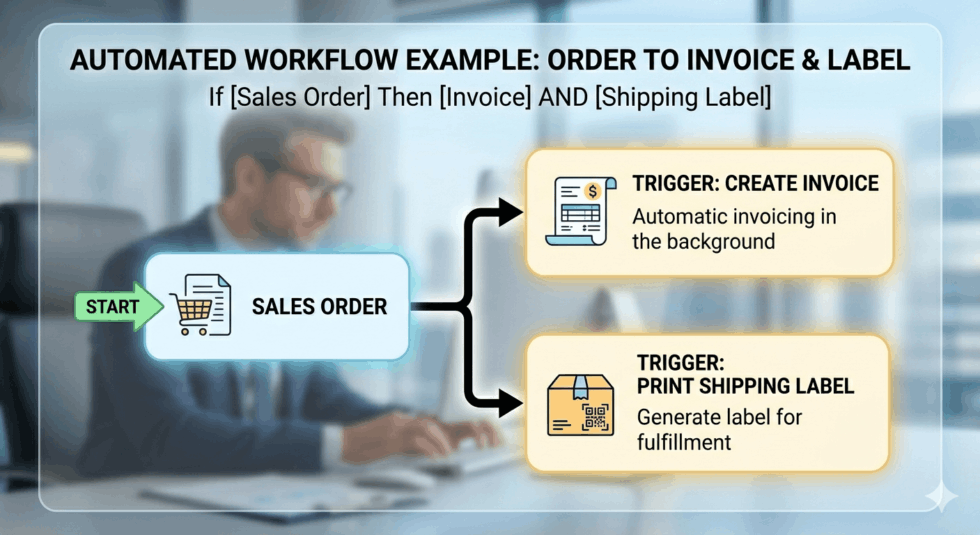
By setting up these rules in NetSuite, you ensure that nothing ever “falls through the cracks.” The system never gets tired, never forgets an email, and never takes a day off. This creates a very positive and reliable environment. Your team doesn’t have to worry about the small details because they know their “Invisible Helper” is taking care of them. This allows everyone to work with a clear mind and a happy heart.
Examples of Helpful Workflows:
- Welcome Sequences: Automatically send helpful guides to new customers.
- Payment Reminders: Gently remind clients about bills before they are late.
- Low Stock Alerts: Notify the purchasing team to order more before you run out.
- Employee Onboarding: Automatically give a new hire access to the files they need.
3. From “Doers” to “Thinkers”: Transforming Job Roles
One of the most exciting results of automation is how it upgrades the roles of your employees. In a manual business, many people are “Doers.” Their job is to move data from point A to point B. While this is important, it doesn’t use the full power of the human brain. When you introduce NetSuite, your team can move from being “Doers” to being Strategists.
A Strategist is someone who uses their mind to solve problems, plan for the future, and create value. For example, instead of a bookkeeper spending all day typing numbers, they can become a “Financial Advisor.” They can use the real-time reports in NetSuite to tell you, “Hey, we are spending too much on shipping; let’s find a better partner.”
This transformation is very rewarding for your staff. Most people want to feel like their work matters. They want to contribute ideas, not just click buttons. By automating the boring parts of their job, you are showing them that you value their intelligence and their creativity. This leads to higher job satisfaction and helps you keep your best people as you grow. It turns your company into a place where “thinking” is the most important task of the day.
The Professional Upgrade List:
- Old Role: Data Entry Clerk $\rightarrow$ New Role: Data Analyst
- Old Role: Order Taker $\rightarrow$ New Role: Customer Success Manager
- Old Role: Stock Counter $\rightarrow$ New Role: Inventory Strategist
- Old Role: Paper Chaser $\rightarrow$ New Role: Operations Leader
4. Improving the Customer Experience Through Speed
Automation doesn’t just help your internal team; it creates a much better experience for your customers. In the modern world, customers expect speed. They want an instant receipt, a fast shipping update, and a quick answer to their questions. If you are doing these things manually, you will always be too slow.
When your business uses NetSuite’s automated efficiency, the customer feels the difference immediately. Everything happens “in the blink of an eye.” The moment they click “Buy,” their journey begins without any delays. This speed builds Customer Trust. Trust is the most important ingredient for long-term growth. A happy customer who gets their order quickly is much more likely to come back and tell their friends about you.

Furthermore, automation helps you provide a “Personal Touch” at scale. You can set rules to send a special discount on a customer’s birthday or a “We miss you” note if they haven’t visited in a while. Because the system does this automatically, you can provide this high-level care to thousands of people at once. It makes every customer feel special and valued, which is the heart of a positive business.
Why Customers Love Automated Efficiency:
- Instant Gratification: No waiting for manual confirmations.
- Accuracy: They get exactly what they ordered every time.
- Communication: They are kept “in the loop” at every step of the process.
- Consistency: They get the same great service on Monday or Saturday.
5. Cultivating a Culture of Innovation
The final and perhaps most powerful benefit of automated efficiency is that it creates a Culture of Innovation. Innovation is just a fancy word for “coming up with new and better ways to do things.” Innovation is the fuel that keeps a company growing for years and years. However, innovation requires “Mental Space.” If your brain is full of chores, there is no room for new ideas.
By automating your daily operations, you clear the mental space for your entire company. You create a environment where people have the time to say, “What if we tried this?” or “I have an idea for a new product.” This is how small companies become giants. They don’t just work harder; they work smarter.
A positive, innovative culture is a magnet for talent. The best and brightest people want to work at a company that uses modern tools and values their input. When you use NetSuite to handle the efficiency, you are telling the world that your business is looking forward, not backward. You are building a company that is not just “Scaling,” but “Evolving.” This is the ultimate goal of the “NetSuite Way”—to create a business that is so efficient it becomes a platform for limitless human potential.
The Innovation Loop:
- Automate Chores: Clear the schedule.
- Empower People: Give them the tools and the time to think.
- Generate Ideas: The team finds better ways to serve customers.
- Implement Growth: The business expands and succeeds.
- Repeat: Keep moving forward with confidence.
Scalability Without Friction: Managing Global and Multi-Entity Complexity
Success often leads to a wonderful new challenge: expansion. You might start with one office in your home city, but soon you find yourself opening branches in other cities or even other countries. This is an exciting time! However, it also introduces a new level of “Complexity.” Complexity simply means that there are more moving parts, different rules, and new languages to manage.
Oracle NetSuite is built to handle this complexity without any “Friction.” Friction is anything that slows your business down, like waiting for a currency to be converted or trying to understand a tax law in a foreign country. In this section, we will see how you can grow across the globe while keeping everything feeling as simple as it was on day one.
1. The Growth Leap: From One Entity to Many
When your business expands, it often splits into different “Entities.” In the business world, an Entity is a legal version of a branch or a separate company that you own. For example, you might have “My Company Egypt” and “My Company Saudi Arabia.” Each of these is a separate entity. Sometimes, these are called Subsidiaries, which just means a smaller company that is owned by a larger “Parent” company.
Managing many entities manually is very difficult. In the old way, each entity would have its own separate bank account, its own set of books, and its own software. To see how much money the whole “Family” of companies made, someone would have to manually add up all the numbers. This is slow and leads to many mistakes.
NetSuite solves this by using a “Multi-Entity” structure. It allows you to keep the books for each branch separately, but they all live inside the same system. You can switch from looking at one branch to looking at the whole company with just one click. This gives you “Smart Control” over your entire empire. You get the best of both worlds: each branch has its own space, but you have the big picture. This structure makes adding a new branch as easy as adding a new folder on your computer.
Table: Single Entity vs. Multi-Entity Growth
| Feature | Single Location (Small) | Multi-Entity (Global) |
| Legal Rules | One set of laws to follow | Many different sets of laws |
| Reports | One simple report | Combined reports from many places |
| Complexity | Low and easy to manage | High (needs a smart system) |
| Speed of Growth | Fast at first | Slows down without automation |
2. Speaking the World’s Language: Multi-Currency and Multi-Language
As you grow globally, you will encounter the “Language of Money.” Every country uses its own Currency, like the Egyptian Pound, the Saudi Riyal, or the US Dollar. If you sell a product in Europe but your main office is in Cairo, you have to deal with Exchange Rates. An Exchange Rate is the value of one currency compared to another (for example, how many Pounds equals one Dollar).
Manual systems struggle with this because exchange rates change every single day. If you use a static spreadsheet, your numbers will be wrong by tomorrow morning! NetSuite handles this automatically. It connects to the global markets and updates exchange rates every minute. When a sale happens in London, NetSuite records it in Euros but also tells you exactly how much that is worth in your home currency. This is called Multi-Currency Management.
Not only does NetSuite speak every currency, but it also speaks almost every human language. Your manager in France can use the system in French, while your team in Tokyo uses it in Japanese. But because the system is unified, all the data flows back to you in your preferred language. This removes the “Language Barrier” and allows your global team to work together in perfect harmony. It makes the world feel smaller and your business feel much larger.
The Global Business Checklist:
- Automatic Conversions: The system does the math for you instantly.
- Localized Forms: Invoices look the way customers in that country expect them to look.
- Unified Data: Different languages on the outside, one truth on the inside.
- Global Access: Your team can log in from anywhere in the world and see the same live data.
3. The Tax Maze Made Simple: Automated Compliance
Every country has its own set of rules for taxes and business operations. These rules are called Compliance. Staying “Compliant” means following the law perfectly so you don’t get fined or face legal trouble. When you operate in five different countries, you have five different sets of tax laws to follow. This is often described as a “Tax Maze.”
In a manual system, your accounting team would have to spend hundreds of hours studying foreign laws and manually calculating taxes for every sale. This is a very stressful job, and the risk of a mistake is very high. NetSuite includes a powerful Tax Engine. This is a built-in helper that already knows the tax rules for over 100 countries.
When you make a sale in a new country, NetSuite automatically calculates the correct tax based on that local law. It even prepares the reports you need to give to that country’s government. This “Automated Compliance” is like having a team of international lawyers working for you for free. It gives you the confidence to enter new markets without being afraid of the paperwork. You can focus on winning customers while the system handles the rules.
Why Automated Compliance is a “Sleep Well” Feature:
- Accuracy: The system uses the latest legal formulas.
- Updates: When a country changes its tax laws, NetSuite updates itself automatically.
- Speed: Tax reports that used to take weeks now take seconds.
- Audit Ready: If a government official asks to see your books, everything is organized and perfect.
4. The Financial “Fold”: Understanding Consolidation
At the end of every month, a global business owner needs to see the “Total Result.” This is the process of taking all the numbers from every subsidiary and folding them together into one big report. This process is called Consolidation. Think of it like taking five separate photo albums and combining them into one beautiful book that tells the story of your whole year.
Consolidation is usually the most difficult task for a manual accounting team. They have to deal with Intercompany Transactions. This is a fancy term for when one part of your business sells something to another part of your business. For example, if your “Manufacturing Entity” sells parts to your “Sales Entity,” you haven’t actually made a profit as a whole company yet. You’ve just moved money from your left pocket to your right pocket.
If you aren’t careful, you might count that money twice, which makes your reports look wrong. NetSuite performs Automated Eliminations. It “sees” these internal trades and removes them from the final total so your reports are 100% accurate. What used to take a team of accountants two weeks of hard work now happens instantly at the touch of a button. This allows you to close your “books” (finish your monthly reports) much faster than your competitors.
The Benefits of Instant Consolidation:
- Clear Vision: See your total global profit every single day.
- Faster Reporting: Be the first to know how your expansion is going.
- Better Investing: Use your accurate totals to decide where to spend money next.
- Zero Double-Counting: The system ensures your internal trades don’t confuse your numbers.
5. Growth Without Pain: Staying Agile in a Big World
The final secret to global scalability is Agility. Agility is the ability to move quickly and easily. Many large companies become “slow giants” because their old systems are too heavy and complicated. They become afraid to try new things because they don’t want to deal with the technical headache of changing their software.
Because NetSuite is built in the Cloud, it is naturally agile. If you decide to open a new office in Brazil tomorrow, you don’t need to fly an IT team there to install servers. You simply create a new “Entity” in your NetSuite dashboard, and the team in Brazil can log in through their web browser. They are instantly connected to your “Single Source of Truth.”
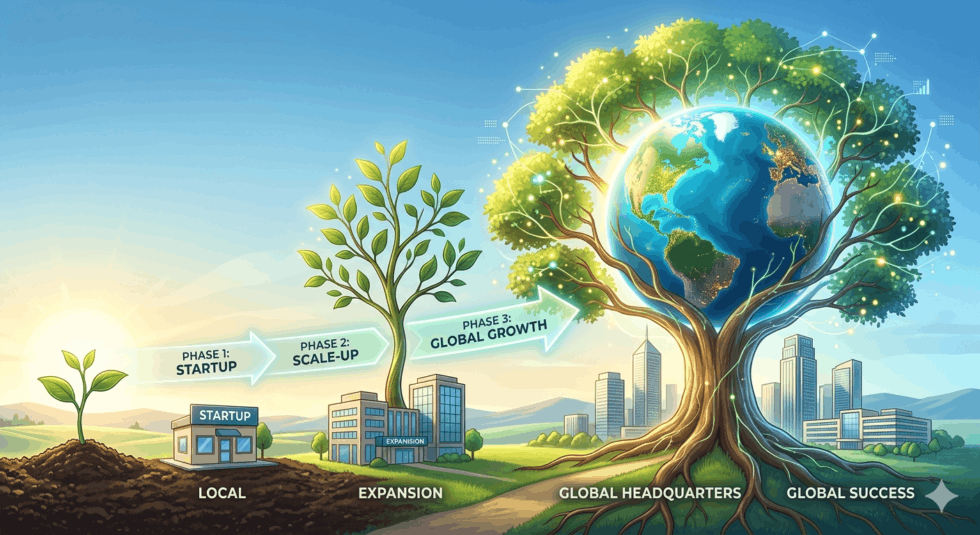
This “Frictionless Scalability” means that your software is no longer a limit on your dreams; it is the wind in your sails. You can grow as fast as your ambition allows. Whether you are adding a new product line, a new country, or a new team of 500 people, the system stays strong and organized. You have achieved the ultimate goal of “Smart Control”: a business that is large enough to change the world but organized enough to feel like a small, happy family.
Your Scalability Roadmap:
- Dream Big: There is no limit to how many countries or entities you can add.
- Act Fast: Launch new branches in days, not months.
- Stay Lean: You don’t need a massive IT department to manage a global system.
- Lead with Confidence: You always have the “Real-Time” truth in your pocket, no matter how big you get.
The Road Ahead: Sustaining Long-Term Momentum and Agility
Congratulations! You have reached the final part of our guide to scaling smarter. By now, you understand how a unified foundation, real-time visibility, and operational control work together. But success is not a final destination. It is a journey that requires constant energy. This final section focuses on how to keep your business moving forward without losing its spark.
We will explore the concepts of Momentum and Agility. Momentum is the strength or force that keeps something moving once it has started. Agility is the ability to move quickly and easily. When you combine these two, your business becomes unstoppable. Let’s look at how to sustain this growth for years to come.
1. The Mindset of Constant Progress
The most successful companies in the world share a secret mindset. They never believe they are “finished.” Instead, they practice a concept called Continuous Improvement. This means they are always looking for small ways to make their business 1% better every single day. Over a year, these small steps turn into a massive leap forward.
In the old way of doing business, change was scary. It often meant breaking your manual systems or retraining everyone from scratch. But with Oracle NetSuite, change becomes a joyful part of your culture. Because your data is organized and your processes are automated, you have the “Mental Space” to think about improvement. You can ask questions like, “How can we make this delivery one hour faster?” or “How can we make our invoices even clearer for our customers?”
This mindset creates Sustainable Momentum. Imagine a large wheel. It takes a lot of effort to get it spinning at first. This was your initial move to a unified foundation. But once that wheel is spinning, it takes very little effort to keep it going. By focusing on small, positive changes, you ensure that your business never stands still. You become a leader who is always looking at the horizon, ready for the next great opportunity.
The “Progress Loop” List:
- Observe: Look at your real-time dashboards to see what is working.
- Listen: Ask your team and your customers for feedback.
- Plan: Decide on one small improvement to try this week.
- Execute: Use your agile system to put the change into action.
- Review: See the positive results and celebrate the win!
2. Data-Driven Innovation: Turning Insights into Action
To stay ahead of your competitors, you must be able to predict what your customers want before they even ask for it. This is called Innovation. Many people think innovation is just about “luck” or “genius ideas.” In reality, the best innovation comes from looking at your data.
With NetSuite, you have access to Insights. An Insight is a deep and clear understanding of a complex situation. For example, your data might show that customers in a certain city are buying more of a specific product every Tuesday. This is an insight! You didn’t guess it; the numbers told you the truth.
Agility comes when you take that insight and turn it into action immediately. Because you have a unified system, you can launch a special “Tuesday Sale” for that city in just a few minutes. You don’t have to hold three meetings to check inventory or confirm prices. You have the facts, so you can move fast. This ability to “pivot” (change direction quickly) is what keeps a business young and energetic. It allows you to catch new trends while they are still fresh.
Table: Guesswork vs. Data-Driven Action
| Situation | The Guesswork Way (Slow) | The Data-Driven Way (Agile) |
| New Trend | Wait until the end of the quarter to notice. | See it happening live on your dashboard. |
| Risk Taking | Feel afraid because you don’t have facts. | Move confidently based on real numbers. |
| Customer Need | React only when they complain. | Predict their needs using purchase history. |
| Competitive Edge | Copy what others are doing. | Lead the market with unique insights. |
3. Building a Resilient and Empowered Team
As your business moves into the future, your team will be your greatest strength. To sustain momentum, you need a Resilient Team. Resilience is the ability to recover quickly from difficulties or change. In a manual business, change causes stress. In a NetSuite-powered business, change causes excitement.
When you give your team the tools of “Smart Control,” you are empowering them. You are moving them away from boring, repetitive tasks and giving them the freedom to be Problem Solvers. A happy and empowered team is much more likely to stay with your company for a long time. This saves you the high cost of hiring and training new people constantly.
To build this culture, focus on Transparency. Transparency means being open and honest about how the business is doing. When you share your real-time dashboards with your managers, they feel like “Owners” of their departments. They can see the direct results of their hard work. This creates a positive “Feedback Loop” where everyone is motivated to reach the next goal together. Your role as a leader changes from “The Boss” to “The Coach.” You are there to guide your talented team as they drive the business forward.
Keys to a Happy, High-Momentum Team:
- Trust: Give them the data they need to make their own decisions.
- Training: Help them master the software so they feel like experts.
- Recognition: Use live data to celebrate individual and team wins instantly.
- Purpose: Show them how their work helps the company grow and serve customers better.
4. Future-Proofing with Cloud Flexibility
One of the biggest reasons companies stop growing is that their technology hits a “Ceiling.” They reach a point where their old servers or software simply cannot handle any more data or users. Replacing these systems is very expensive and causes a lot of “Friction.” To avoid this, you need a Future-Proof foundation. Future-proofing means designing something so that it doesn’t become out-of-date.
Oracle NetSuite provides this by living in The Cloud. As we learned, the cloud is a network of powerful, secure computers. The beauty of the cloud is that it is virtually “Elastic.” This means it can stretch to any size you need. If your business grows 10 times larger next year, NetSuite simply stretches to accommodate you. You never have to worry about “running out of space” or your system “crashing” during a big sale.
Furthermore, NetSuite provides Automatic Updates. In the past, “Upgrading” your software was a nightmare that could take months. With NetSuite, you get the latest features and security patches twice a year, automatically. You are always using the most modern version of the software without having to lift a finger. This ensures that you always have the best tools to maintain your momentum and agility. You are always ready for whatever the future brings.
The Benefits of Cloud Flexibility:
- No Technical Ceilings: The system grows as large as your dreams.
- Always Modern: Enjoy the latest innovations without the cost of upgrades.
- Global Security: Your data is protected by the world’s best technology.
- Financial Predictability: You pay a steady subscription instead of huge, surprise IT bills.
5. Your Legacy: The Vision of Smart Control
We have reached the end of our journey together. We have moved from the confusion of the Growth Paradox to the clarity of Smart Control. You now have a roadmap for building a unified, visible, and automated business. But remember, the most important part of this entire guide is You.
Your vision and your leadership are what bring these tools to life. Oracle NetSuite is the engine, but you are the driver. By choosing a unified foundation, you are not just buying software; you are choosing a better way of life for yourself and your team. You are choosing a world where you have the time to enjoy your success, the data to lead with confidence, and the agility to win in a fast-moving world.
Your Legacy is the impact you leave behind. By scaling smarter, you are building a company that is strong, honest, and ready for the future. You are creating a professional environment where people love to work and customers love to buy. This is the ultimate goal of “Smart Control.” We hope this guide has given you the confidence to take the next step. The road ahead is bright, and with the right foundation, there is no limit to what you can achieve.
Your Final Roadmap to Momentum:
- Unify: Bring all your data into one happy home.
- Visualize: See through the fog with real-time dashboards.
- Control: Strengthen your reins with roles and approvals.
- Automate: Free your team to focus on what matters.
- Scale: Expand across the globe without friction.
- Lead: Stay agile and keep the momentum rolling!
Conclusion: Your Journey from Complexity to Clarity
We have traveled a long way together through the world of modern business growth. We started by looking at the “Growth Paradox,” where success can sometimes feel like a heavy weight. We then explored the magic of a unified foundation, the power of real-time visibility, and the safety of ironclad control. We even looked at how automation and global scalability can turn a local company into a world-class leader.
Now, it is time to bring all these pieces together. This conclusion isn’t just an ending; it is a launchpad for your next great chapter. Scaling smarter isn’t a dream—it is a practical, step-by-step process that you can start today. Let’s recap the most important lessons to keep your momentum high and your vision clear.
1. The Great Business Transformation: From Pieces to a Whole
Think back to where we began. Most growing companies start with a “Puzzle Pieces” approach. They have one software for sales, another for accounting, and a third for the warehouse. At first, this seems fine. But as the puzzle gets bigger, the pieces stop fitting together. This is where most businesses slow down. They spend more time trying to force the pieces together than they do serving their customers.
Oracle NetSuite changes this entire story. Instead of a box of separate pieces, it gives you a “Unified Foundation.” This means your entire business is built on one single, strong piece of stone. When you change something in one corner of your company, the whole structure knows about it instantly. This transformation is the most important step in your growth. It moves you away from “Managing Problems” and toward “Leading Progress.”
By choosing a unified system, you are making a choice for simplicity. You are choosing to stop the “Data Silos” that keep your teams apart. You are choosing to have a “Single Source of Truth.” This isn’t just about technology; it is about harmony. When everyone in your company is looking at the same facts and the same goals, work becomes a joy. You are no longer fighting your own systems. Instead, your systems are helping you fight for your place in the market.
The Transformation Checklist:
- Move to the Cloud: Say goodbye to expensive office servers.
- Connect Your Teams: Ensure Sales, Finance, and Ops talk to each other.
- Trust Your Data: Eliminate manual spreadsheets that contain errors.
- Focus on the Whole: Stop fixing small parts and start leading the entire company.
2. The Three Pillars of a Strong Future
As you look toward the road ahead, there are three main pillars that will support your long-term success. These are Visibility, Control, and Automation. Think of these like the legs of a sturdy stool. If one is missing, the business will wobble. But when all three are strong, you can build as high as you want.
- Visibility is your ability to see through the fog. With real-time dashboards, you are never in the dark. You know your bank balance, your stock levels, and your customer satisfaction scores every second of the day. This “Now-View” allows you to make smart decisions before problems even happen.
- Control is your ability to stay on the right path. By using roles and digital history books (audit trails), you protect your company. You ensure that the right people have the right keys. This builds a culture of professional honesty and safety.
- Automation is your engine of efficiency. It takes the “Busy Work” off your team’s desk and handles it in the background. This is the ultimate gift you can give your staff. It allows them to stop being “Doers” and start being “Thinkers.”
Table: The Impact of the Three Pillars
| The Pillar | The Old Way (Manual) | The NetSuite Way (Smart) | The Result |
| Visibility | Monthly reports on paper | Live dashboards on screen | Confidence and Speed |
| Control | Hope and loose habits | Ironclad digital standards | Safety and Trust |
| Automation | Boring manual typing | Seamless digital flows | Creativity and Time |
When these three pillars are working together, your business gains a massive competitive advantage. You are faster than your rivals, safer than your competitors, and more creative than the rest of the market.
3. Empowering the Heart of Your Business: The People
While we have talked a lot about software and data, the true heart of your business is your people. A company is simply a group of humans working together toward a shared goal. One of the most beautiful results of scaling smarter with NetSuite is how it changes the lives of your employees.
In a “foggy” business, employees are often stressed. They are worried about making mistakes, frustrated by late information, and tired of repetitive tasks. This leads to “Burnout,” which is when a talented person feels so tired they stop caring about their work. By introducing automated efficiency and clear visibility, you are removing the things that cause burnout. You are giving them a professional environment where they can actually succeed.
When your team has the “Mental Space” to be creative, they will surprise you with their ideas. They will find new ways to help customers and better ways to save money. This creates a “Positive Culture.” A positive culture is a magnet for the best talent. The smartest people in the world want to work for companies that are organized and forward-thinking. By investing in a unified foundation, you are actually investing in your people’s happiness and future. This is the secret to building a team that will stay with you for decades.
How Smart Control Empowers Your Team:
- Clear Expectations: Everyone knows exactly what their job is and how to do it.
- Less Stress: The “Invisible Helper” (Automation) handles the boring chores.
- More Meaning: Employees see how their work helps the whole company.
- Professional Growth: Your staff learns to use world-class technology.
4. Staying Ahead in an Ever-Changing World
The world of 2026 and beyond is moving faster than ever before. New trends appear overnight, and customer expectations are constantly rising. To survive and thrive, your business must be Agile. As we discussed, agility is the ability to move quickly and easily. A heavy, manual company cannot be agile. It is like trying to turn a giant ship in a narrow river.
But with NetSuite’s cloud flexibility, your business is like a fast, nimble boat. You can launch a new branch in a new country in days. You can change your pricing in seconds to match a competitor. You can add a brand new product line without breaking your accounting books. This “Frictionless Scalability” is what allows small companies to disrupt entire industries.
Staying ahead also means being “Future-Proof.” You don’t want to buy a system today that you will outgrow in three years. NetSuite is designed to grow with you. Whether you have 10 employees or 10,000, the system remains strong. It updates itself automatically, so you always have the latest tools. This means you never have to go through a painful “System Change” ever again. You are always ready for the future, no matter what it looks like.
The Agile Leader’s Mindset:
- Embrace Change: Don’t fear new opportunities; your system can handle them.
- Look at the Data: Use your insights to see where the world is going next.
- Scale Without Pain: Open new offices or entities with total confidence.
- Stay Modern: Enjoy automatic updates that keep you at the “Cutting Edge.”
5. Final Thoughts: Embarking on Your Growth Chapter
You are now standing at a very exciting crossroads. You have a choice between the old way of “Manual Chaos” and the new way of “Smart Control.” The journey to scaling smarter is one of the most rewarding things a business leader can ever do. It is the process of turning a struggling, noisy machine into a quiet, powerful engine of success.
Remember that you don’t have to do everything at once. The “Road Ahead” is built one step at a time. Start by unifying your foundation. Then, clear the fog with visibility. Next, strengthen your reins with control. Finally, let automation give your team the gift of time. Each step you take will make your business faster, safer, and more profitable.
Your business is more than just a way to make money; it is your legacy. It is a reflection of your hard work, your vision, and your care for your customers and team. By choosing to scale smarter, you are ensuring that your legacy is strong and lasting. You are building something that can stand the test of time.
The “NetSuite Way” is a commitment to excellence, clarity, and growth. We hope this guide has inspired you to dream bigger and move faster. The tools are ready, the path is clear, and the future is waiting for you. It is time to take the reins and lead your business into its brightest chapter yet.
Your Final Call to Action:
- Reflect: Identify the biggest “Data Silo” in your company today.
- Envision: Imagine how much time your team would save with automation.
- Explore: Look into how a unified foundation could solve your Growth Paradox.
- Execute: Take the first step toward smart control and never look back!