

Running a factory is hard work. It often feels like you are trying to drive a fast car while looking through foggy glasses.
Everything is messy. You can’t see your stock clearly. Machines break down unexpectedly. Papers get lost. Stressed-out managers don’t know which problems to fix first. When things are this chaotic, it is impossible to grow. In fact, many factories get stuck simply trying to survive.
But there is a different way. Imagine clear vision, smooth operations, and a business that is ready to get bigger and better every day. This is “Epic Factory Growth.”
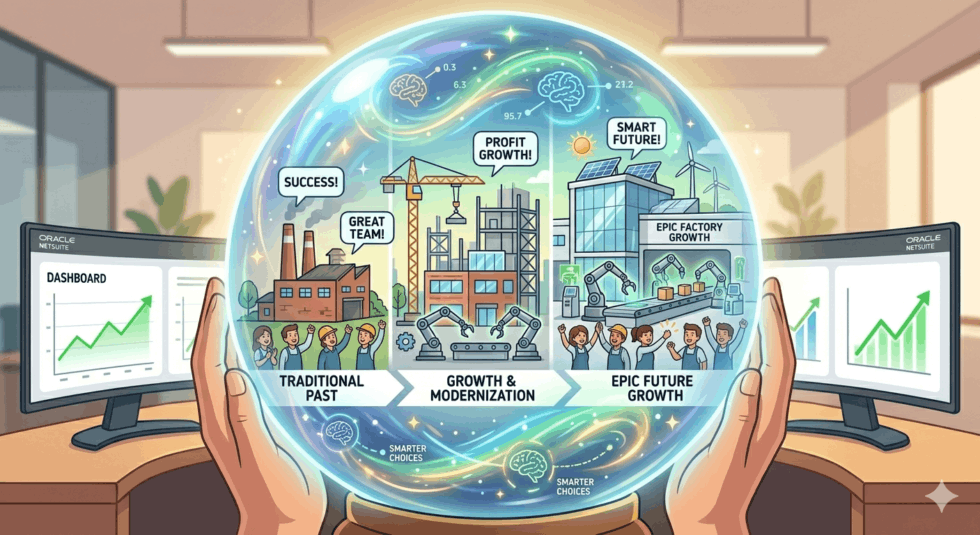
The visual below shows the transformation you are about to read about. It is the journey from a slow, chaotic mess to a fast, clean, and growing business.
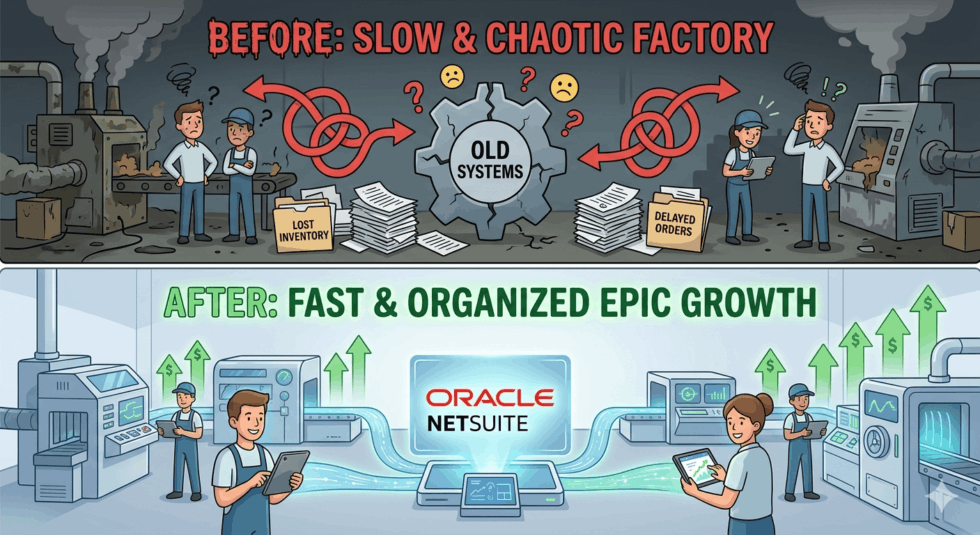
Oracle NetSuite is the key that unlocks this new, organized world. It cleans up the mess, connects all the scattered pieces of your business, and helps you see everything clearly. This article will show you exactly how to use this powerful tool to make your factory run perfectly and grow faster than ever before.
The Main Problems Factories Face Today
This section looks at the common hurdles factories face. Understanding these challenges is the first step toward a bright and successful future. By identifying these areas, we can find the best ways to improve and grow.
1. Dealing with Disorganized Information
Many factories have information spread across many different places. Some notes are on paper. Other details are in a manager’s head. Some numbers are in old computer files. This is what we call Scattered Data. Data is simply a collection of facts or numbers. When it is scattered, it is very hard to see the “big picture.”
Imagine trying to build a puzzle, but the pieces are in five different rooms. You spend more time walking and looking for pieces than actually building the puzzle. This causes confusion. It makes it hard to answer simple questions. For example, a manager might not know how much a product truly costs to make.
The good news is that organizing this information is a huge opportunity. When all the facts are in one place, everyone stays on the same page. This is like moving all your puzzle pieces onto one big table. Suddenly, you can see how everything fits together. Clear information leads to fast and confident decisions.
| Old Way (Scattered) | New Way (Organized) |
| Notes on sticky notes | Digital records |
| Asking five people for one answer | One click for answers |
| Making guesses | Using real facts |
| Wasted time searching | Fast and easy work |
A clean system helps the whole team feel more relaxed. They don’t have to worry about losing a paper or forgetting a number. Instead, they can focus on making great products.
2. The Challenge of Managing Materials
A factory needs “stuff” to make products. These materials are called Inventory. Inventory includes the raw materials you buy, the parts you are currently working on, and the finished products ready to sell. Managing this is a balancing act.
Sometimes, a factory has “too much” inventory. This is like buying ten gallons of milk when you only need one. The extra milk might go bad, and it takes up too much space in your fridge. In a factory, having too much stock ties up your money. That money could be used for better things, like new machines or hiring more workers.
On the other side, sometimes there is “too little” inventory. This is even worse. If you run out of a small part, the whole factory might have to stop. This is a missed chance to sell your goods.
Key Benefits of Smart Inventory:
- Saving Money: You only buy what you need.
- Saving Space: Your warehouse stays neat and tidy.
- Happy Customers: You always have products ready for them.
- Less Waste: Materials do not sit around and get old or broken.
By using a smart system, you can always know exactly what you have. It is like having a smart kitchen that tells you when you are low on salt before you start cooking. This keeps the factory moving smoothly every single day.
3. Understanding Production Slowdowns
Sometimes, a factory is like a busy road. Most of the road is wide and fast, but one small bridge is narrow. All the cars get stuck at that bridge. This narrow spot is called a Bottleneck. In a factory, a bottleneck is one machine or one step that is slower than all the others.
If one machine can only make 10 parts an hour, but the next machine can handle 100, the second machine will sit idle. It is waiting for work. This is a waste of time and energy. Identifying these slow spots is very exciting because it shows you exactly where to improve.
When you fix a bottleneck, the whole factory speeds up. It is like widening that narrow bridge so all the cars can zoom through.
How to Spot and Fix a Bottleneck:
- Watch the Flow: Look for where piles of work are building up.
- Measure Time: See how long each step takes.
- Balance the Work: Move some tasks to faster machines or people.
- Upgrade: Sometimes, a small change to a machine makes it much faster.
Solving these issues creates a “flow.” Flow is when work moves from start to finish without stopping. A factory with good flow is a happy and productive place. It allows the business to produce more items in less time without making the workers feel rushed.
4. Keeping Machines Running Smoothly
Machines are the heart of the factory. When they work well, everything is great. But sometimes, a machine stops working without warning. This is called Unscheduled Downtime. Downtime is simply the time when a machine is not producing anything. It is very expensive because the workers are still there, but no products are being made.
Many factories use a “wait and see” method. They only fix a machine after it breaks. This is like never changing the oil in your car until the engine stops on the highway. It causes stress and delays.
A much better way is Preventative Maintenance. This means “looking ahead.” It involves checking and cleaning machines on a schedule, even when they seem fine. This keeps the machines in top shape and prevents big, scary breakdowns.
Why Planning Repairs is Better:
- Safety: Machines that are well-kept are safer for the workers.
- Lower Costs: Fixing a small part is cheaper than replacing a whole engine.
- Longer Life: Your machines will last for many more years.
- Predictability: You can choose to fix the machine on a weekend when the factory is closed.
Using a smart digital tool helps you remember these checkups. It is like a calendar that sends you a friendly reminder. This proactive approach turns “emergencies” into “simple tasks.” It makes the factory a much calmer and more predictable environment.
5. Better Communication Between Teams
A factory is made of many different groups. There is the office team, the warehouse team, and the shop floor team. If these teams do not talk to each other, problems happen. This is often called working in Silos. A silo is a tall, closed building for grain. In a factory, it means a team is “closed off” from everyone else.
For example, the sales team might sell 1,000 items, but the production team doesn’t know about it. Or, the warehouse might run out of boxes, but they don’t tell the office to buy more. This lack of sharing creates “mixed signals.”
The solution is to build bridges between these silos. When everyone uses the same system, they can all see the same information at the same time. This is called Collaboration. Collaboration is just a fancy word for “working together effectively.”
The Results of Great Teamwork:
- No More Guesses: Everyone knows the plan for the day.
- Fewer Errors: Information is shared correctly the first time.
- Faster Work: People don’t have to wait for an email or a phone call.
- Higher Morale: Workers feel more connected and important.
When a factory has great communication, it feels like a winning sports team. Everyone knows their role, and everyone is working toward the same goal. This unity is what allows a small factory to become a giant in its industry. By solving these five problems, you clear the path for amazing growth and success.
Why Oracle NetSuite is the Best Choice
Choosing the right tool for your factory is a very big and exciting step. Oracle NetSuite is often called the best choice for smart manufacturing. It is a powerful system that helps you run your whole business with ease. In this section, we will look at why so many successful factories love using it.
1. One Central Brain for Your Whole Factory
In the past, factories used many different programs that did not talk to each other. One program was for sales, another for the warehouse, and another for the workers. This made things very confusing. Oracle NetSuite is different because it is an ERP.
ERP stands for Enterprise Resource Planning. This is just a fancy way of saying “one central brain.” Imagine if your factory was a giant robot. An ERP is the brain that tells the arms, legs, and eyes exactly what to do at the same time. When everyone uses the same brain, there are no more mixed signals.
Why having “one brain” is wonderful:
- No more double work: You only enter information once, and the whole system knows it.
- Accuracy: Since everyone sees the same numbers, there are fewer mistakes.
- Speed: Information moves from the office to the factory floor in a split second.
- Teamwork: Every department can help the other because they can see what is happening.
When all your tools are in one place, your work becomes much simpler. You don’t have to waste time jumping between different screens or apps. Instead, you can focus on making high-quality products and keeping your customers happy. It is a very peaceful and organized way to work.
2. The Freedom of the Internet Cloud
Oracle NetSuite lives in “The Cloud.” The Cloud is a term used to describe storing information on the internet instead of on a single computer in your office. Think of it like your email. You can check your email from your phone, your laptop, or a computer at a library. NetSuite works exactly the same way.
Before the cloud, factories had to buy big, expensive computers called “servers” and keep them in a cold room. They had to hire experts to fix these computers when they broke. With NetSuite, you don’t need any of that. Oracle takes care of the big computers for you. You just log in and start working.
| The Old Way (On-Site) | The NetSuite Way (The Cloud) |
| You must be at the office to work | Work from home, the factory, or anywhere |
| Expensive to buy big computers | Low monthly cost for the service |
| You have to fix things yourself | Oracle keeps the system safe and updated |
| Risk of losing data if a computer breaks | Your data is backed up safely on the internet |

Working in the cloud gives you amazing freedom. If you are traveling or at home, you can still see how many items your factory made today. This flexibility makes life much easier for owners and managers. It also means your information is much safer from fires, floods, or hardware failures.
3. Seeing the Truth Right Now
One of the best things about NetSuite is that it works in Real-Time. Real-time means that information is updated the very second something happens. If a worker finishes a box of products, the system shows that the box is ready immediately. You don’t have to wait until the end of the day or the end of the week to see the report.
To see this information, NetSuite uses a Dashboard. A dashboard is a simple screen that shows your most important numbers using bright colors and easy charts. It is just like the dashboard in a car that tells you how fast you are going and how much gas you have left.
Common things you see on a NetSuite Dashboard:
- Sales Today: A big number showing how much you sold.
- Inventory Levels: A chart showing if you are low on materials.
- Production Speed: A graph showing how fast your machines are running.
- Pending Tasks: A list of things that need to be done next.
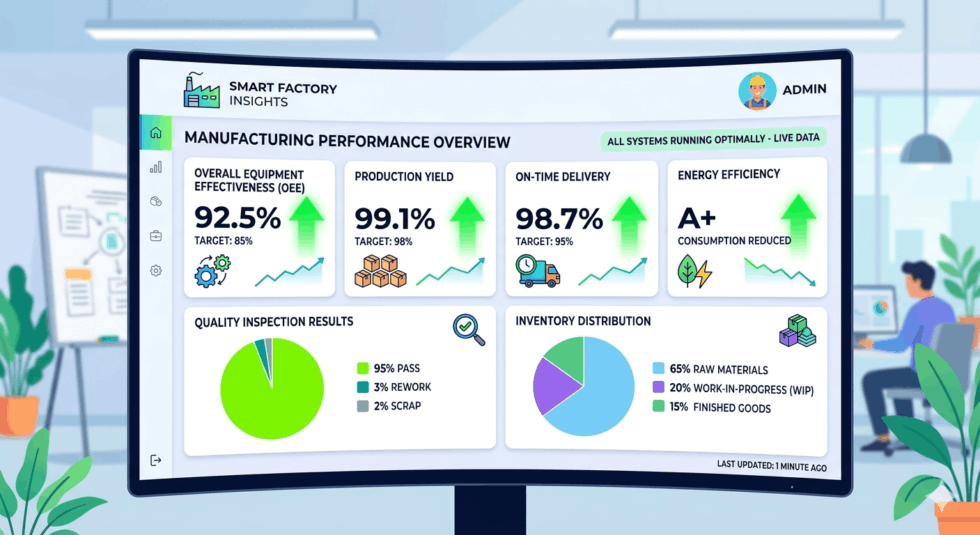
When you have real-time information, you never have to guess. If you see a problem on your dashboard, you can fix it right away before it becomes a big disaster. This is like having a superpower that lets you see through walls. It gives you great confidence because you always know the truth about your business.
4. A System That Grows as You Grow
Every factory wants to get bigger. You might start with five workers today and want to have fifty workers next year. In the old days, growing was scary because you had to buy new software every time you got bigger. NetSuite is different because it has Scalability.
Scalability is the ability of a system to get larger or smaller very easily. Imagine a plant pot that stretches as the plant grows. You never have to move the plant to a new pot; the pot just gets bigger with the plant. NetSuite is built to handle a small family business or a giant global company.
How NetSuite helps you grow:
- Add new locations: If you open a second factory, you just add it to the system.
- New languages: If you sell to other countries, the system can change the language and money type.
- More workers: You can add new users in just a few clicks.
- New features: As you need more advanced tools, you can simply turn them on.
This means you only pay for what you need today. You don’t have to buy a giant system that is too big for you right now. But, you also never have to worry about “outgrowing” your software. NetSuite is a partner that stays with you for your whole journey, from your first sale to your millionth sale.
5. Built for Real People to Use
Some computer programs are very difficult to learn. They have too many buttons and look very confusing. Oracle NetSuite is designed to be user-friendly. User-friendly means that it is easy for a regular person to understand and use without needing to be a computer expert.
The screens are clean and organized. You can even change the screens to show only the buttons you need. For example, a person in the warehouse will see a screen that is perfect for shipping boxes. A person in the office will see a screen that is perfect for counting money. This makes training very fast and easy.
Why people love using NetSuite:
- Easy Search: You can find any order or customer by typing their name in a search bar, just like Google.
- Helpful Reminders: The system sends you alerts when you need to do something important.
- Works on Phones: There is a mobile app so you can work while walking around the factory floor.
- Visual Learning: It uses many pictures and colors instead of just long lists of boring text.
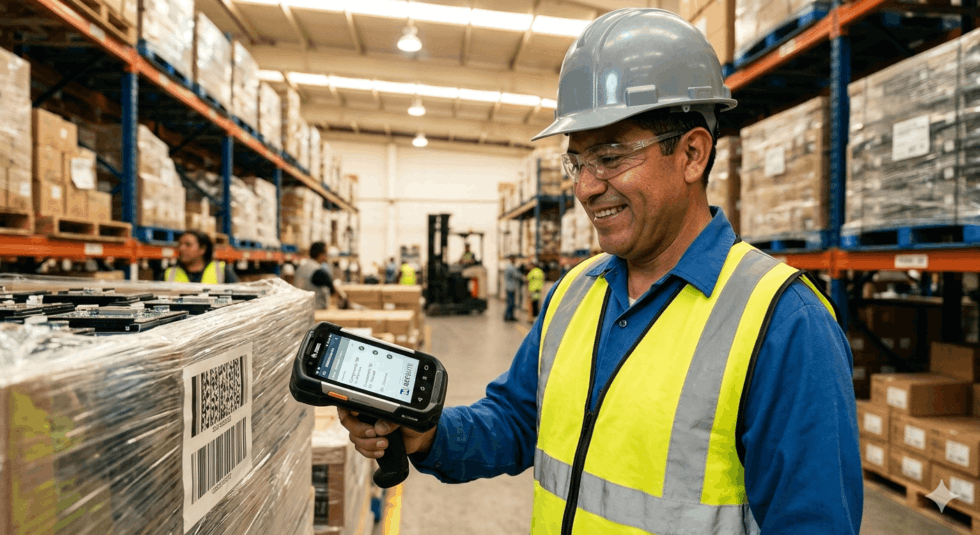
When a system is easy to use, the whole team is much happier. They don’t feel frustrated by the computer. Instead, they feel empowered. They have the tools they need to do a great job. A happy team is a productive team, and NetSuite helps make that happen every single day. By choosing this system, you are choosing a bright, easy, and successful future for your factory.
Make Your Production Smooth and Fast
A factory that runs smoothly is a beautiful thing to see. It is like a well-trained orchestra where every musician knows their part. In this section, we will explore how Oracle NetSuite helps you turn your factory into a fast, smooth, and very successful machine. By making small, smart changes, you can produce more items and make your customers happier than ever before.
1. Planning Your Work Like a Pro
The secret to a fast factory is a great plan. In manufacturing, we often talk about Lead Time. Lead Time is simply the total time it takes from the moment you start making a product until it is completely finished and ready to ship. If your lead time is too long, customers might get tired of waiting.
Oracle NetSuite uses a tool called MRP. This stands for Material Requirements Planning. Think of it as a “Smart Shopping and Making List.” It looks at how many orders you have and tells you exactly when you need to buy materials and when you should start building. It is like having a GPS for your production line that tells you the fastest route to the finish line.
Why a smart plan makes life better:
- No more rushing: You start jobs early enough so nobody feels stressed.
- Saving money: You don’t buy materials too early, so your money isn’t just sitting on a shelf.
- Better promises: You can tell your customers exactly when their order will be ready.
- Balanced work: No machine is too busy while another is sitting empty.
| The Old Way (Guessing) | The NetSuite Way (Planning) |
| Starting late and rushing | Starting at the perfect time |
| Forgetting to buy a small part | The system reminds you to buy everything |
| Overworking the team | A steady, calm pace of work |
| Unexpected delays | A smooth flow from start to finish |
When you have a pro-level plan, the whole factory feels calmer. People know what to do next, and the machines never have to stop because a part is missing. This is the first step to making your production truly “epic.”
2. Watching the Work Happen Live
To keep a factory fast, you need to see what is happening right now. NetSuite uses something called a Work Order. A Work Order is a digital document that gives the team a specific list of instructions to complete a job. It tells them what materials to use and which machines to operate.
In many old factories, these instructions are on pieces of paper that get dirty or lost. With NetSuite, workers use tablets or touchscreens right on the factory floor. As they finish a step, they tap a button. This is called Shop Floor Control. It means the manager in the office can see the progress of every single item without leaving their desk.
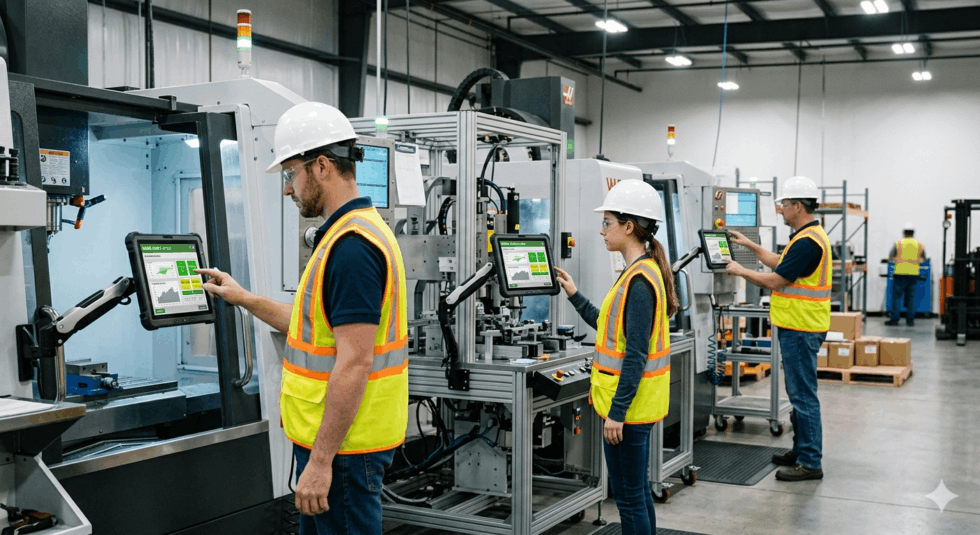
Benefits of live tracking:
- Instant Updates: You know exactly how many items are finished every hour.
- Finding Problems Fast: If a machine stops, a red light appears on the digital map.
- Better Records: You know exactly which worker made which item and when.
- Less Paperwork: No more searching for lost folders or messy notes.
Imagine you are watching a live sports game. You wouldn’t want to wait until the next day to find out the score. You want to see the score change as the goals happen! NetSuite gives you that same “live score” for your factory. This keeps everyone focused and helps the work move at a very fast and steady pace.
3. Doing Things Right the First Time
Speed is only good if the products are high-quality. If you make 1,000 items but 200 of them are broken, you have wasted a lot of time. These broken items are called Defects. A defect is any product that does not meet your high standards and cannot be sold to a customer.
NetSuite helps you stay fast by focusing on Quality Assurance. This is a set of steps used to make sure every item is perfect. The system can stop the production line at certain points and ask a worker to check the product. For example, the worker might need to measure the weight or take a photo of the item.
How NetSuite ensures quality:
- Checklists: Workers follow simple steps on their screen to ensure nothing is missed.
- Warnings: If a measurement is wrong, the system alerts the manager immediately.
- Tracking: If a customer finds a problem later, you can look back and see what went wrong.
- Consistency: Every item is made exactly the same way, every single time.
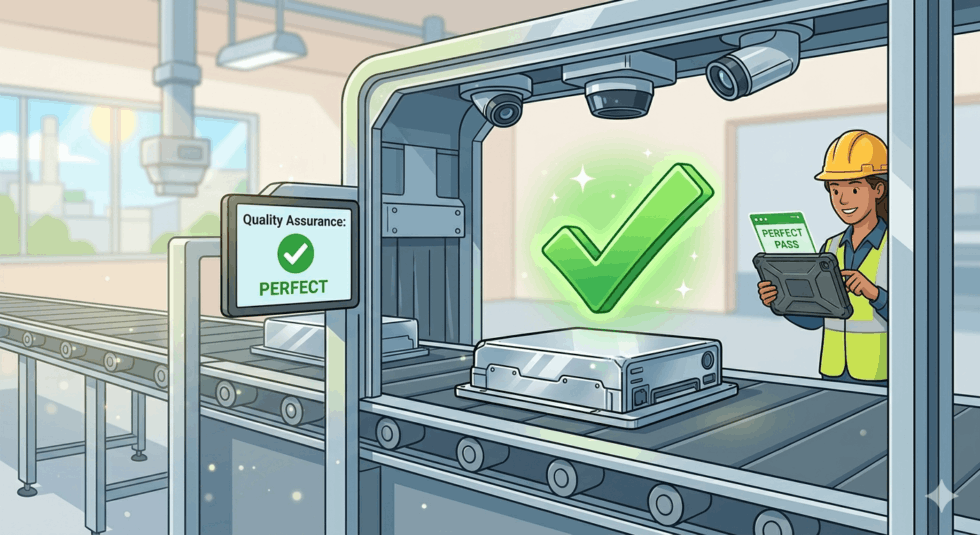
When you do things right the first time, you save a massive amount of time. You don’t have to go back and fix mistakes. This is often called “Lean” thinking. By removing mistakes, your factory naturally becomes faster and more profitable. Your team will feel proud because they are making products they know are excellent.
4. Using Your Tools and Team Wisely
A factory is only as fast as its resources. Resources include your talented workers and your powerful machines. To be smooth, you need to match the right people with the right tasks. This is called Capacity Planning. Capacity is simply the maximum amount of work your factory can handle in a day or a week.
Sometimes, one team has too much work while another team has nothing to do. This creates a mess. NetSuite looks at your schedule and helps you balance the Labor. Labor is the physical or mental work done by your team. The system shows you a simple chart of who is doing what, so you can move people to where they are needed most.
Ways to help your team and tools:
- Skills Matching: The system makes sure a worker has the right training before they start a complex machine.
- Machine Health: It tracks how many hours a machine has worked so it can suggest a quick cleaning before it gets too tired.
- Avoiding Overtime: By planning well, you don’t have to ask people to stay late, which keeps them happy and energized.
- Space Saving: It tells you exactly where to put finished boxes so the floor stays clear and safe.
[List of “Daily Success Steps” for a factory team leader]
- Check the digital dashboard for today’s goals.
- Ensure every worker is at the right station.
- Look for any machines that need a quick check-up.
- Celebrate with the team when a big order is finished!
When your team feels supported by a smart system, they work better and faster. They don’t have to guess what to do or wait for instructions. Everything is ready for them, which makes the work feel light and enjoyable.
5. Finding Ways to Get Even Better
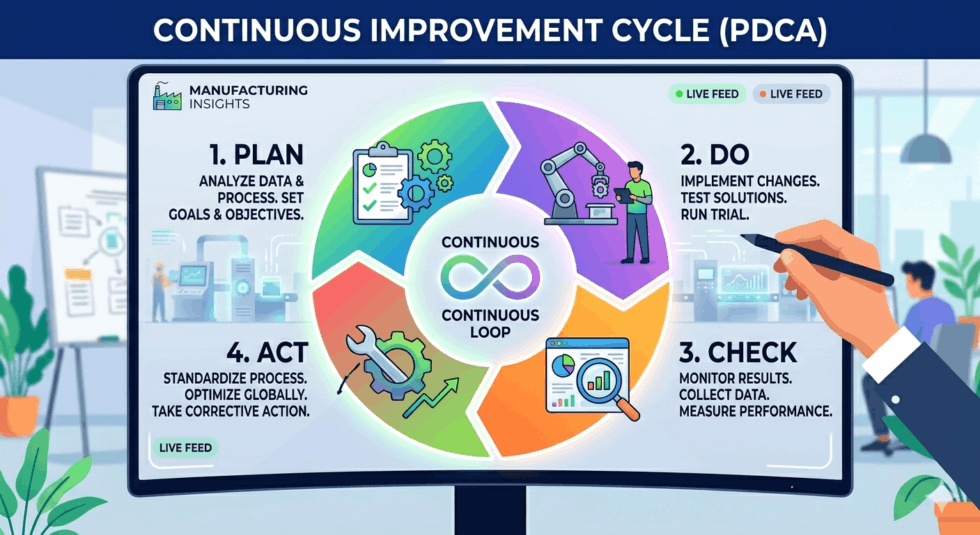
The best factories never stop learning. They are always looking for ways to be even faster tomorrow than they were today. This is called Continuous Improvement. It is the habit of making small, positive changes every week. NetSuite provides the data you need to find these “hidden” opportunities for growth.
One thing the system tracks is Efficiency. Efficiency is a measure of how much you produce using the least amount of time, money, and materials. If you can make the same great product with less waste, your business grows much faster. Waste is anything that takes away from your success, like extra scraps of metal or a machine that runs for no reason.
How to grow with NetSuite data:
- Compare Days: See why Tuesday was faster than Monday and learn from it.
- Test New Ideas: Try a new way of packing boxes and see if it saves time.
- Reward Success: When the team hits a new speed record, you will have the facts to celebrate their hard work.
- Think Big: Use your extra time and money to design new products or find new customers.
Continuous improvement is like a game where you try to beat your own high score. It makes the work exciting and fun for everyone. By using Oracle NetSuite to watch your numbers and try new things, you aren’t just running a factory—you are building a masterpiece of speed and organization. Every day is a chance to be better, and with the right tools, your growth will be truly epic.
Track Your Stock the Easy Way
Managing your stock is like taking care of a garden. If you know exactly where every seed is planted and how much water you have, your garden will bloom beautifully. Oracle NetSuite makes tracking your stock—which we call Inventory—very simple and even fun. In this section, we will see how you can keep your warehouse organized and your business growing.
1. Knowing What You Have at All Times
Inventory is a word for all the materials you use to make products, plus the finished items waiting to be sold. In many factories, people have to guess how much they have. This is like trying to bake a cake without checking if you have flour. It creates stress and leads to mistakes.
Oracle NetSuite gives you a “live view” of your warehouse. This means every time a box moves, the system updates immediately. You can look at your computer or phone and see the exact number of items you own. This is a very powerful feeling. You can trust your numbers and make big plans with confidence.
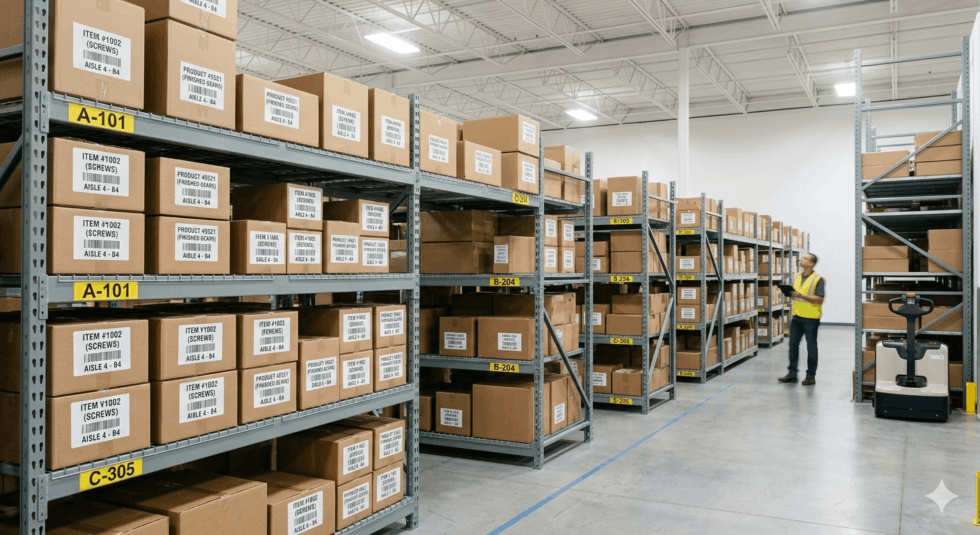
Why clear stock numbers help you:
- Confidence: You know you can fulfill every order you take.
- Accuracy: You don’t buy things you already have in the back.
- Speed: You can answer customer questions about stock in seconds.
- Peace of Mind: You don’t have to worry about “hidden” problems in the warehouse.
| The Old Way (Guessing) | The NetSuite Way (Knowing) |
| “I think we have ten boxes.” | “We have exactly twelve boxes.” |
| Counting by hand every weekend. | The system counts for you live. |
| Losing items in corners. | Every item has a digital home. |
| Buying too much and wasting money. | Buying only what you need. |
When you know exactly what you have, you are in total control. This clarity is the foundation of a successful and growing factory. It allows you to focus your energy on finding new customers instead of searching for lost boxes.
2. Organizing Your Warehouse for Success
A messy warehouse is like a messy kitchen. It takes ten minutes to find the salt, and by then, the food is burnt. To be fast, every item needs a specific home. In NetSuite, we use Bins. A bin is simply a specific spot on a shelf, like a “parking space” for a box.
The system helps you map out your warehouse into zones. You can put fast-moving items near the door and slow-moving items in the back. This is called Space Management. It ensures that your workers spend less time walking and more time doing important work. It makes the warehouse a safe and happy place to be.
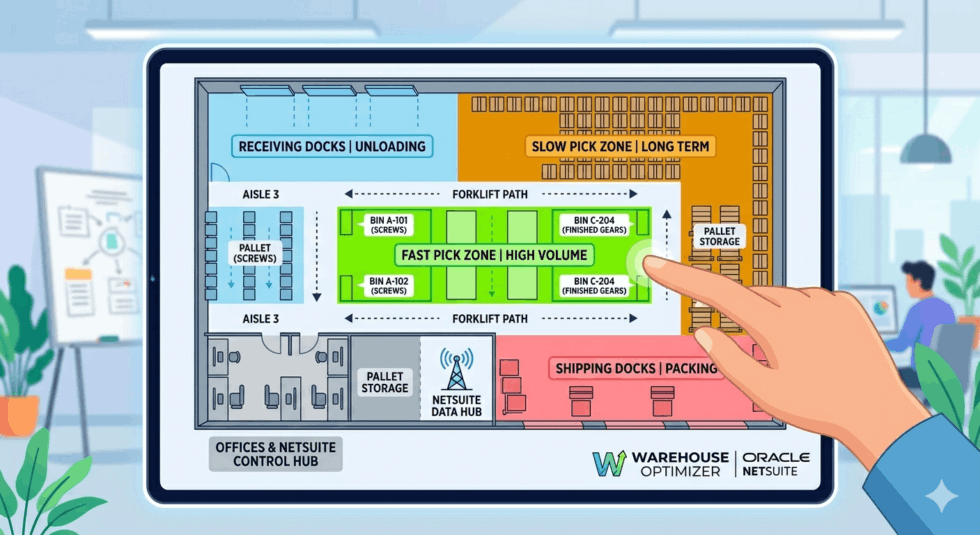
How to organize with bins:
- Label Everything: Give every shelf and bin a name or a number.
- Group Items: Put similar materials together so they are easy to find.
- Use the Map: Follow the digital map in NetSuite to go straight to an item.
- Keep it Tidy: When a bin is empty, the system shows it is ready for new stock.
Using bins makes training new workers very easy. You don’t have to tell them, “Look for the blue boxes behind the big machine.” Instead, you tell them, “Go to Bin A-102.” This simple change saves hours of time every week and keeps the factory floor looking professional and clean.
3. Avoiding the Stress of Running Out
Nothing stops a factory faster than running out of a tiny part. This is a very common problem that causes a lot of unhappiness. NetSuite helps you avoid this with two smart tools: the Reorder Point and Safety Stock.
A Reorder Point is like the “low fuel” light in a car. It is a specific number you set in the system. When your stock hits that number, NetSuite sends you a friendly alert to buy more. Safety Stock is an extra pile of materials you keep “just in case” there is a delay with a delivery. It is like having an extra tire in the trunk of your car.
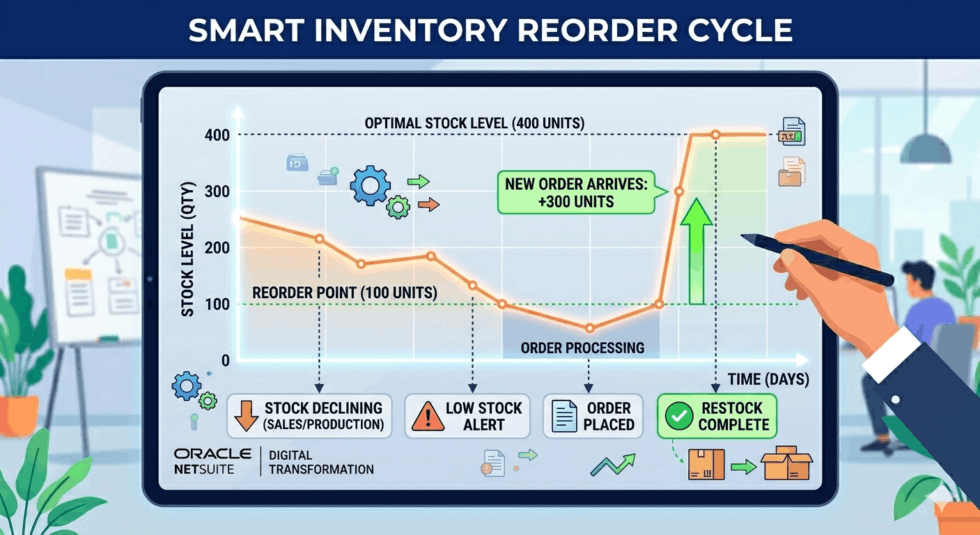
How to set a perfect reorder plan:
- Look at History: See how fast you usually use the material.
- Check Delivery Time: Know how long it takes for the supplier to bring more.
- Set the Number: Put that number into NetSuite once, and it remembers forever.
- Relax: Let the system do the watching while you focus on growth.
When you use these tools, the “emergencies” disappear. You always have exactly what you need to keep your machines running. Your team stays busy and productive, and your customers are happy because their orders are never late. It turns a stressful job into a smooth and predictable process.
4. Saving Money by Reducing Waste
In a factory, waste is money that is thrown away. This happens when materials get too old, get broken, or are forgotten. NetSuite helps you save this money using Batch Tracking. A batch (or “lot”) is a group of items that were made or bought at the same time.
By tracking batches, you can use the oldest items first. This is very important if you work with food, chemicals, or materials that can go bad. The system also helps you track Expiration Dates. It will show you a warning if a material is getting too old to use. This keeps your quality high and your costs low.
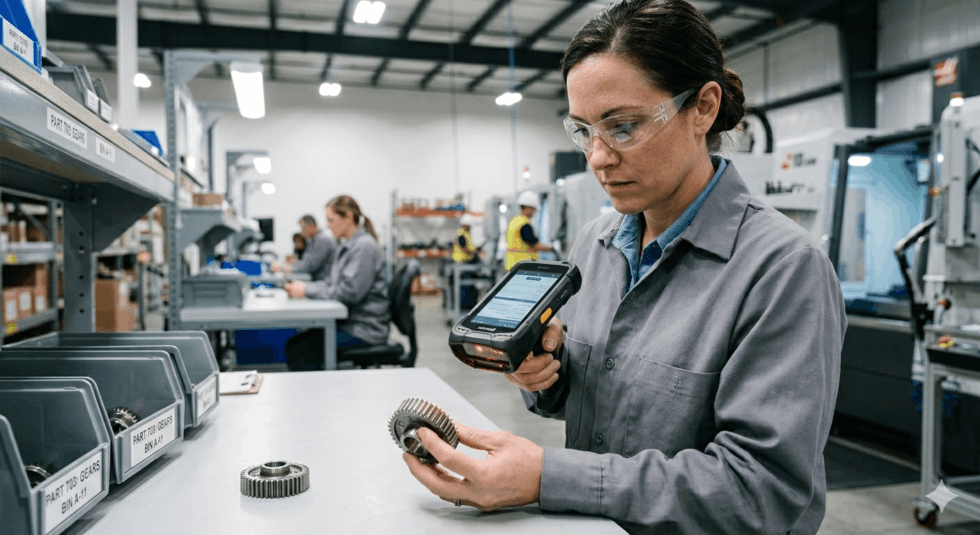
Things that can go to waste without tracking:
- Hidden Materials: Items that sit at the bottom of a pile for years.
- Expired Goods: Materials that are no longer safe or strong to use.
- Lost Parts: Small items that fall behind shelves and are never found.
- Over-buying: Ordering more because you “thought” you were out.
Saving money on waste is one of the fastest ways to increase your profit. Profit is the money left over after all the bills are paid. When you use NetSuite to watch your batches and dates, you are being a very smart and careful business owner. It is a great way to respect your resources and your hard work.
5. Counting Stock Without Stopping Work
Most factories have to close for a whole day or a weekend once a year to count everything. This is a very long and boring task. It also means you lose a day of making products. NetSuite offers a much better way called Cycle Counting.
Cycle counting means you check a very small part of your stock every single day. Maybe on Monday you count the screws. On Tuesday, you count the paint. On Wednesday, you count the boxes. Because you only count a few things, it only takes 10 minutes. You never have to close the factory, and your numbers stay accurate all year long.
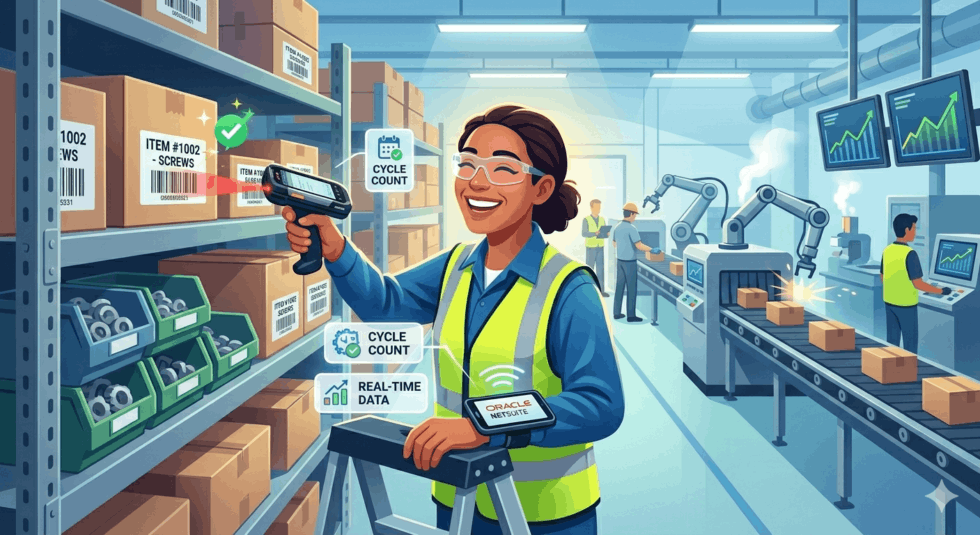
Benefits of daily cycle counting:
- No Shutdowns: Your factory stays open and keeps making money.
- Early Detection: You find small mistakes and fix them immediately.
- Less Stress: Counting a few items is much easier than counting thousands.
- Always Accurate: Your digital records always match what is actually on the shelf.
| Annual Counting (The Old Way) | Cycle Counting (The NetSuite Way) |
| Close the factory for 2 days. | Factory stays open every day. |
| Workers are tired and bored. | Workers do a quick, easy task. |
| Numbers are only right once a year. | Numbers are right every single day. |
| Big, scary corrections to the books. | Small, easy fixes as you go. |
By counting a little bit every day, you keep your business healthy and honest. It is a simple habit that leads to massive success. Oracle NetSuite makes this habit easy to start and easy to keep. With these five steps, you will be tracking your stock like a pro, and your factory will be ready for epic growth!
Use Simple Data to Make Smarter Choices
Making smart choices is the secret to growing a great business. Sometimes, running a factory feels like walking in the dark. You might be worried about making a mistake or spending too much money. Oracle NetSuite acts like a bright flashlight. It turns confusing numbers into simple facts that help you lead with confidence. In this section, we will learn how easy data helps you see the truth and make choices that lead to big success.
1. Turning Numbers into a Clear Map
Many people think “data” is a scary or boring word. But Data is just a collection of facts and numbers about your business. It tells you things like how many boxes you made, how much you spent on electricity, or how many hours your team worked. On their own, these numbers are just bits of information. But when you put them together in NetSuite, they become a map.
Imagine you are looking for a hidden treasure. If you just start digging everywhere, you will get tired and frustrated. But if you have a map with a big “X,” you know exactly where to go. NetSuite takes all the messy numbers from your factory and draws that map for you. It shows you which parts of your business are doing great and which parts need a little more love.

Why simple data is your best friend:
- It removes the “Guesswork”: You don’t have to say “I think we are doing okay.” You can say “I know we are doing great!”
- It saves time: You don’t have to spend hours doing math. The system does it for you in a heartbeat.
- It builds trust: When you show facts to your team or your bank, they see that you are a smart and organized leader.
- It spots “Leaks”: Just like a pipe in your house, money can “leak” out of a factory. Data helps you find and fix those leaks fast.
Using data is not about being a math expert. It is about being a curious leader who wants to find the best path forward. NetSuite makes this path easy to see, so every choice you make feels like a winning move.
2. Your Daily View of Success
To make good choices, you need to see your progress every day. In NetSuite, this happens on a Dashboard. A dashboard is a single computer screen that shows your most important facts using bright colors and simple pictures. It is just like the dashboard in a car that shows you how much gas you have and how fast you are going.
When you sit down at your desk and open your dashboard, you get a “Status Report” in three seconds. You don’t have to call three people or look through five folders. Everything you need to know is right there, waiting for you. This allows you to start your day with a smile and a clear plan.

| Method | Finding Success Numbers | Stress Level |
| The Old Way | Searching through papers for hours | Very High |
| The NetSuite Way | One look at your dashboard | Very Low |
| The Results | You are usually tired and late | You are fast and ready to win |
What your dashboard might show:
- The “Happiness Meter”: A chart showing how many customers gave you a “thumbs up.”
- The “Speed Gauge”: A simple needle showing if your machines are running at top speed.
- The “Money Box”: A big number showing exactly how much profit you made today.
- The “To-Do List”: A list of the three most important things to fix right now.
Seeing your success in real-time is very exciting. It turns your work into a game where you can see yourself getting better and better. This daily clarity is what helps you make the small, smart choices that lead to a very big and healthy business.
3. Knowing Your True Costs and Profit
Every business owner wants to make a Profit. Profit is the money you have left over after you pay for all your materials, workers, electricity, and rent. To have a high profit, you must understand your Costs. A cost is any money that goes out of your business to make a product happen.
Sometimes, a factory makes a product that looks great, but it actually costs too much to make. Without simple data, you might keep making that product and losing money without even knowing it! NetSuite tracks every penny. It tells you exactly how much it costs to make one single item. This is called Job Costing. It is like having a tiny accountant sitting on your shoulder, helping you spend your money wisely.
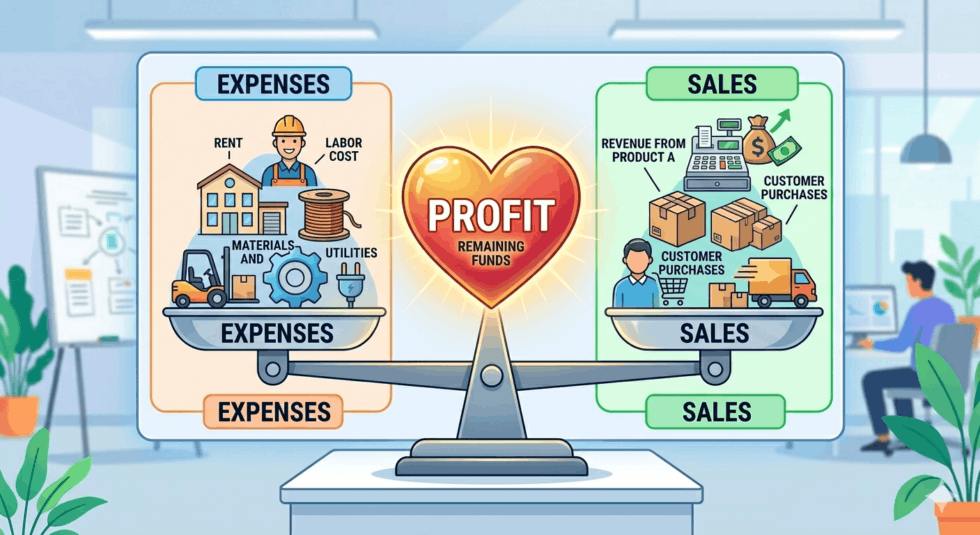
Costs that NetSuite tracks for you:
- Raw Materials: Every screw, piece of wood, or gallon of paint.
- Labor Time: Exactly how many minutes a worker spent on a specific job.
- Energy: How much power your big machines used during the day.
- Shipping: What it cost to get the product to the customer’s door.
When you know your true costs, you can set the perfect price for your products. You can stop doing things that waste money and do more of the things that make money. This makes your business very strong and stable. You will feel proud knowing that every item leaving your factory is helping your business grow.
4. Predicting a Bright Future
Making smart choices is also about looking ahead. This is called Forecasting. Forecasting is using facts from the past to make a very good guess about what will happen in the future. It is just like a weather report. If the report says it will rain tomorrow, you remember to bring an umbrella.
NetSuite looks at your sales from the last few months or years. It then shows you what to expect next month. For example, it might show you that you always sell more boxes in December. Because you know this “fact,” you can buy more materials in November so you are ready. You never have to panic or rush at the last minute.
How looking ahead helps you grow:
- No Surprises: You aren’t shocked by big orders because you saw them coming.
- Smart Hiring: You know when to hire new people because you see that the work is increasing.
- Buying Early: You can save money by buying materials when the price is low.
- Saving for Growth: You know exactly when you will have enough extra money to buy that new machine you’ve wanted.
Predicting the future isn’t magic—it’s just using simple data. It makes you feel like a “Time Traveler” who knows the secrets of next month. This allows you to stay calm and prepared while other businesses are struggling to keep up. With NetSuite, the future of your factory looks very bright and very busy.
5. Sharing Success with the Whole Team
The best choices are made when everyone is working together. In a factory, the workers on the floor often know things that the managers don’t, and the managers know things the office doesn’t. NetSuite helps everyone share their “Success Facts” easily. This is called Reporting. A report is a simple summary of information that you can print out or send in an email.
When you share a report with your team, they feel important and included. If the team sees a chart showing that they made 10% more products this week, they feel like winners! They want to work even harder to see that number go up again. It turns a “job” into a “mission.”
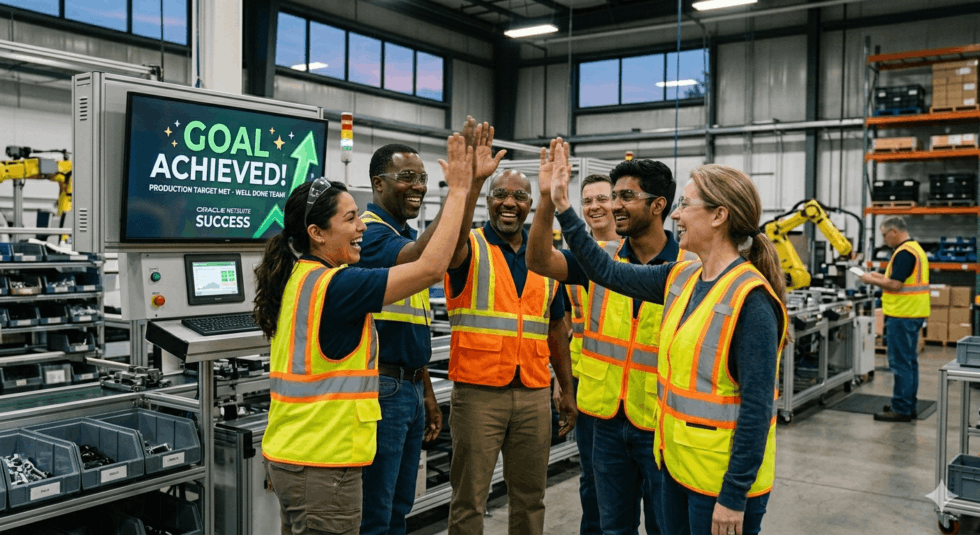
Great things to share in a team report:
- Safety Records: “We have had 100 days with zero accidents! Great job everyone!”
- Quality Wins: “Only 1 item out of 500 had a mistake this week. We are the best!”
- Production Milestones: “We just made our one-millionth box! Let’s celebrate!”
- Customer Praise: “A customer sent a note saying they loved our fast shipping!”
Sharing simple data builds a culture of honesty and pride. People don’t feel like they are just “pushing buttons.” They feel like they are part of a winning team that is making smart choices together. When everyone has the facts, the whole factory moves forward as one powerful unit. This teamwork, powered by simple data, is the final ingredient for your epic factory growth.
How to Grow Your Business Faster
Growing your business is an amazing journey. It is like watching a small seed turn into a giant, strong tree. When you have the right tools, growth feels natural and exciting. Oracle NetSuite is designed to help you speed up this journey without making things complicated. In this final section, we will explore five ways to make your factory bigger, better, and more successful every single day.
1. Building Strong Friendships with Your Customers
To grow faster, you need more people to buy your products. But it is not just about finding new people; it is about keeping the ones you have. In business, we use a tool called CRM. This stands for Customer Relationship Management. It is a fancy way of saying “keeping a digital notebook about your friends.”
NetSuite’s CRM stores everyone’s name, what they like to buy, and when they last talked to you. When a customer calls, you don’t have to ask, “Who are you?” Instead, you can say, “Hello! I see you loved the blue boxes we sent last month.” This makes the customer feel special. Happy customers tell their friends about you, and that is the best way to grow.

How a digital “friendship notebook” helps you:
- Never Forget a Detail: You remember birthdays or special requests.
- Be Proactive: If a customer hasn’t ordered in a month, the system tells you to call them.
- Make Selling Easy: You know exactly what to offer each person based on what they bought before.
- Teamwork: Everyone in your office can see the same notes, so the customer always gets the same great service.
| Traditional Selling | Growing with CRM |
| Forgetting customer names. | Every name is saved safely. |
| Losing phone numbers on paper. | Numbers are always one click away. |
| Customers feel like strangers. | Customers feel like family. |
| Slow growth from new sales only. | Fast growth from repeat customers. |
When your customers feel like you truly care about them, they become loyal. Loyalty is the “secret sauce” of a fast-growing factory. It builds a solid foundation of money coming in every month, which gives you the freedom to try new things.
2. Using Computers to Do the Hard Work
As your factory gets bigger, you will have more “boring” tasks to do. This includes things like typing in addresses or sending emails. If you do this by hand, you will eventually run out of time. To grow faster, you need Automation. Automation means “letting the computer do the repetitive work for you.”
Imagine if every time a customer bought something, the computer automatically told the warehouse, updated the bank, and sent a “thank you” email. That is what NetSuite does. It frees up your time so you can focus on big ideas, like designing new products or meeting new partners.
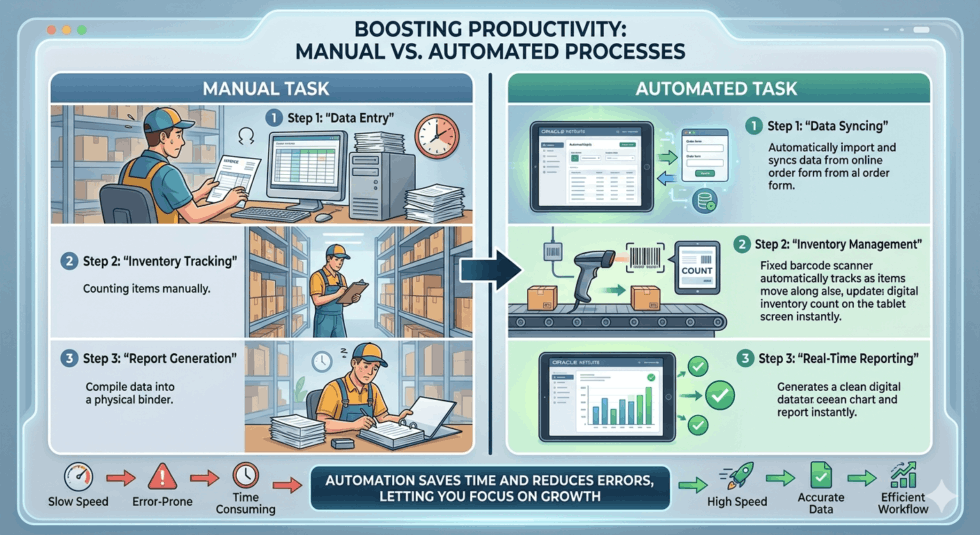
Common tasks you can automate:
- Sending Bills: The system sends the bill as soon as the product leaves the door.
- Updating Stock: As soon as an item is sold, the system subtracts it from your total.
- Making Reports: Every Friday, a success report can be sent to your email automatically.
- Alerts: If a machine needs a check-up, the system sends a reminder.
Using automation is like having a team of invisible helpers who never get tired. It allows your factory to do twice as much work without hiring twice as many people. This is a very smart way to increase your profit while keeping your stress levels very low.
3. Selling Your Products in New Ways
A great way to grow is to sell your products in more places. In the past, you might have only sold to people who visited your office. Today, you can use E-commerce. E-commerce is just a word for “selling things on the internet.”
NetSuite connects your factory directly to your website. When someone clicks “Buy” on their phone, the order shows up in your factory immediately. You can also sell to people in other cities or even other countries! By opening these new “digital doors,” the whole world becomes your customer.
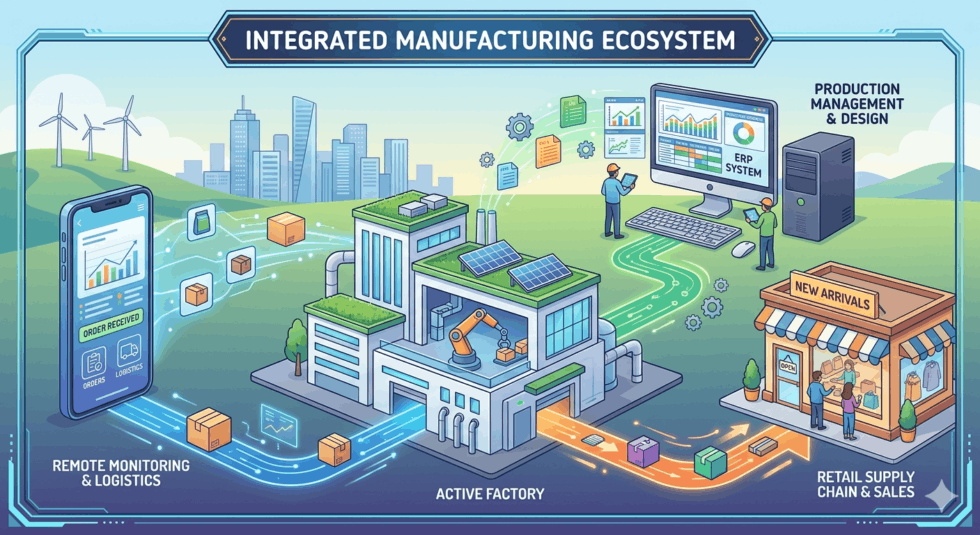
Why selling online is a growth engine:
- Open 24/7: Your website stays open while you are sleeping.
- Wider Reach: You aren’t limited to the people who live nearby.
- Easy for Customers: People love the convenience of ordering from home.
- Professional Look: A clean website makes your factory look big and modern.
A Checklist for Selling in New Places:
- [ ] Create a simple website with clear pictures of your products.
- [ ] Make sure the website works well on mobile phones.
- [ ] Connect your website to NetSuite so stock levels stay accurate.
- [ ] Offer different ways to pay, like credit cards or bank transfers.
Expanding into the digital world is a giant leap for any factory. It might feel a little scary at first, but NetSuite makes it feel safe and organized. Before you know it, you will be shipping orders to places you’ve never even visited!
4. Making Every Product Perfect Every Time
As you grow, you will be making hundreds or thousands of items. It is very important that the quality stays high. If a customer gets a broken item, they might not come back. To prevent this, we use Quality Control. This means “checking your work to make sure it is perfect.”
NetSuite helps you set up “Checkpoints” in your factory. At each checkpoint, a worker can use a tablet to answer simple questions like, “Is the color right?” or “Is the weight correct?” If the answer is “No,” the system stops the item before it ever leaves the building. This keeps your reputation perfect and your customers happy.
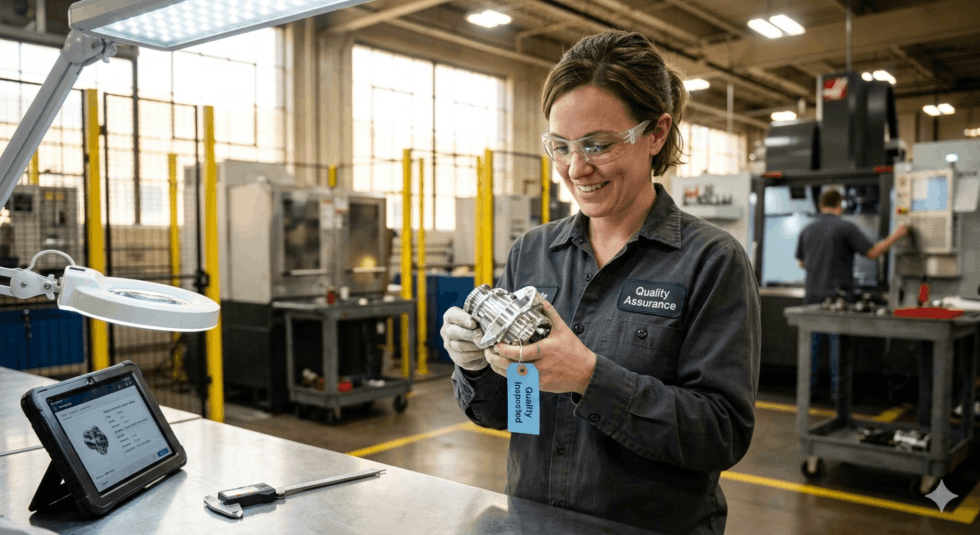
The benefits of perfect quality:
- Fewer Returns: You don’t waste money fixing or replacing bad products.
- Better Reviews: Happy customers give you five stars online.
- Pride in Work: Your team feels good knowing they make the best products in town.
- Higher Prices: People are happy to pay a little more for something they know is high quality.
Simple Quality Rules to Follow:
- Check the Materials: Make sure the wood or metal you buy is strong.
- Test the First Item: Check the very first item of the day extra carefully.
- Ask the Team: Let your workers suggest ways to make the product better.
- Listen to Feedback: If a customer has a problem, use it as a lesson to improve.
Quality is not an accident; it is the result of a good system. When you use NetSuite to watch over your production, you are building a brand that people can trust. Trust is the most valuable thing any business can own.
5. Taking the Next Big Step with Confidence
The final stage of growth is called Scalability. This is a big word that means “your business is ready to get much bigger without breaking.” A scalable business is like a building with a very strong foundation. You can keep adding more floors, and the building will stay steady.
NetSuite is built to grow with you. Whether you have five workers or five hundred, the system works the same way. If you decide to open a second factory in another town, you can connect it to your main system in just one day. This gives you the confidence to say “Yes!” to big opportunities because you know your system can handle it.
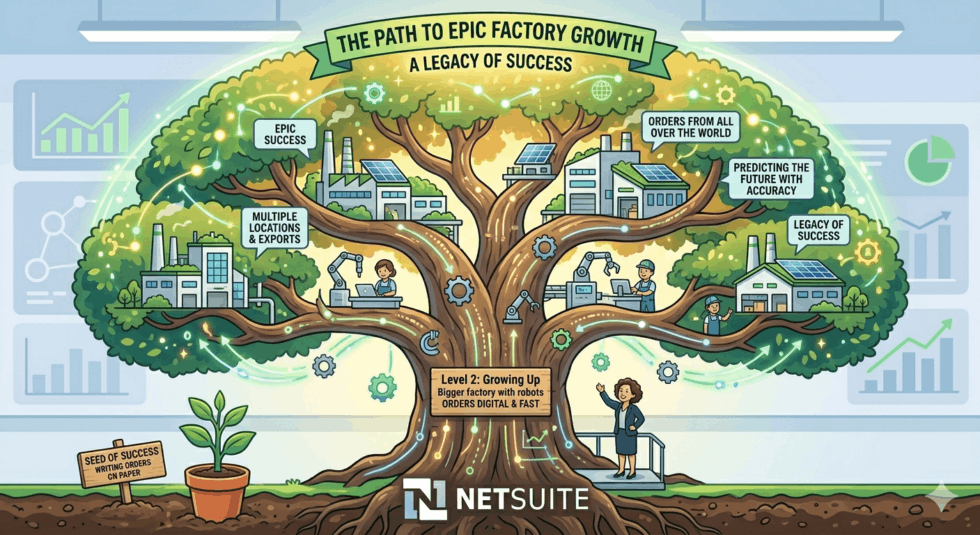
Signs that you are ready for big growth:
- Your Numbers are Clear: You know your profit and costs perfectly.
- Your Team is Happy: People know their jobs and have the tools they need.
- Your Customers are Loyal: You have a steady stream of orders coming in.
- Your System is Ready: You are using NetSuite to keep everything organized.
| Level 1: Starting Out | Level 2: Growing Up | Level 3: Epic Success |
| One small factory. | Bigger factory with robots. | Multiple locations and exports. |
| Writing orders on paper. | Orders are digital and fast. | Orders come from all over the world. |
| Guessing the future. | Using data to plan ahead. | Predicting the future with accuracy. |
| Hard work for the owner. | The owner leads a great team. | The owner enjoys a legacy of success. |
Growth is a beautiful thing. It creates jobs, helps the community, and rewards your hard work. By using simple data, staying organized, and treating your customers like friends, you are setting yourself up for a truly epic future. Oracle NetSuite is honored to be your partner on this journey. Let’s grow together!
Easy Steps to Start Your New Factory Plan
Starting a new plan for your factory is like planning a wonderful vacation. You need to know where you are going, what to pack, and who is coming with you. When you have a clear plan, the work becomes much easier and everyone feels happy. This section will guide you through five simple steps to build a strong foundation for your factory’s future.
1. Dream Big with a Clear Goal
Before you start any work, you need a target. In business, we call this an Objective. An objective is a specific goal that you want to reach. It is like a finish line in a race. If you don’t know where the finish line is, you will just run in circles.
When you set an objective, you give your team a reason to be excited. Maybe you want to make 500 more chairs this month, or maybe you want to sell your products in a new city. Whatever it is, write it down in big, bold letters. This helps everyone stay focused on the same dream.

How to set a great goal:
- Be Specific: Instead of saying “I want to grow,” say “I want to grow by 10%.”
- Be Positive: Use words like “Achieve,” “Create,” and “Succeed.”
- Keep it Simple: A goal should be so easy that a child can understand it.
- Write it Down: Seeing your goal every day makes it feel real.
| Goal Type | Example of a Good Goal | Why it Works |
| Sales | Sell 200 items this week. | It has a clear number. |
| Quality | Zero mistakes in production. | It aims for perfection. |
| Speed | Ship orders in 24 hours. | it focuses on being fast. |
| Happiness | Every worker learns a new skill. | It focuses on people. |
Having a goal is the first step to making your factory great. It acts like a compass that always points toward success. When you know your objective, every choice you make becomes much simpler.
2. Gathering Your Dream Team
A factory is not just machines; it is made of people. To make a great plan, you need to talk to your Stakeholders. A stakeholder is anyone who has an interest in the factory’s success. This includes your workers, your managers, your customers, and even your family.
When you involve your team in the plan, they feel like “owners” of the project. They will work harder because they helped create the idea. Each person sees the factory from a different angle. A worker might know why a machine is slow, while a manager knows how to save money. By listening to everyone, you create a plan that is much stronger than if you did it alone.

The benefits of a “Dream Team”:
- Better Ideas: Two heads are always better than one.
- Less Fear: People are less afraid of change when they are part of it.
- Faster Work: Everyone knows their role, so there is no confusion.
- A Happy Workplace: Friends working together make the day fly by.
People to include in your planning meeting:
- The Experts: The people who use the machines every day.
- The Organizers: The people who handle the schedules and orders.
- The Helpers: The people who clean and maintain the building.
- The Leaders: The people who keep everyone motivated and happy.
Teamwork is the heartbeat of a successful factory. When you value your stakeholders, you build a culture of trust and kindness. This positive energy is what makes a business grow fast and stay strong for many years.
3. Drawing Your Factory’s Story
Now that you have a goal and a team, it is time to draw a map of how work gets done. We call this a Workflow. A workflow is simply the sequence of steps an item takes from being a “raw material” to becoming a “finished product.” It is like the recipe for a delicious cake.
To draw your workflow, start at the very beginning. Where do you buy your materials? Where do they sit in the warehouse? Which machine touches them first? By drawing these steps on paper or a computer, you can see if any steps are wasting time. If an item has to travel across the room and back again, you can change the layout to make it faster.
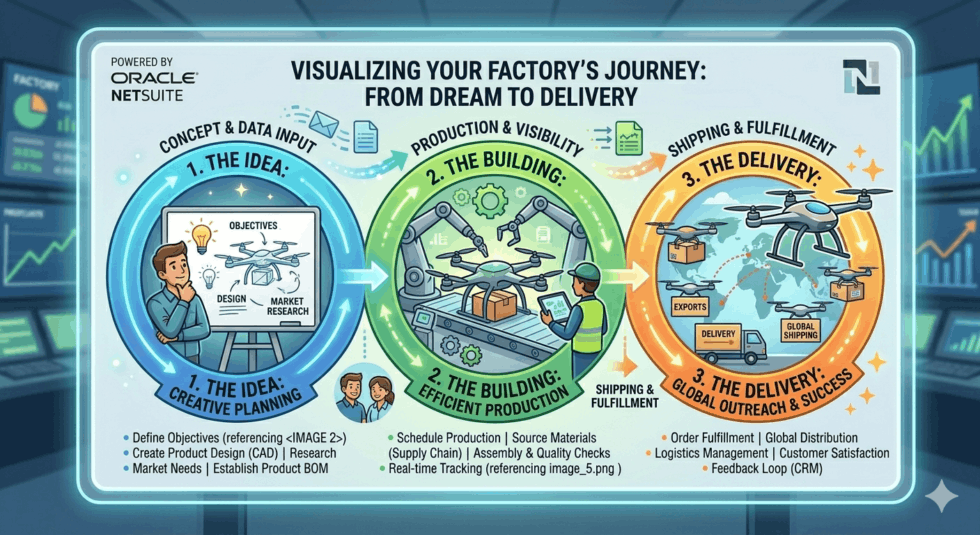
Why a visual story is helpful:
- Spotting Problems: You can see “traffic jams” before they happen.
- Training New People: You can show a new worker the map so they learn fast.
- Saving Energy: Shorter paths mean less walking and less electricity used.
- Consistency: Every item is made exactly the same way every time.
Steps to Map Your Workflow:
- [ ] Follow one item from the door to the truck.
- [ ] Count how many times it stops or sits still.
- [ ] Ask the team if any step feels “annoying” or “difficult.”
- [ ] Draw a new, straighter line that makes the work feel easy.
Your workflow is the story of your factory’s hard work. When the story is clear and simple, the work feels like a dance. Everything flows smoothly, and there is no stress or rushing. This clarity is a major secret to building an epic business.
4. Choosing Your Digital Helper
In the modern world, a factory needs a computer “brain” to keep track of everything. The process of setting up this system is called Implementation. Implementation is the journey of putting a new tool into action. It is like learning how to ride a new, high-tech bicycle.
Oracle NetSuite is the perfect digital helper for your factory. It connects all your notes, numbers, and maps into one place. When you choose your software, look for something that is easy to use and grows as you grow. You don’t want a tool that is too complicated; you want a tool that feels like a helpful assistant who is always ready to answer your questions.
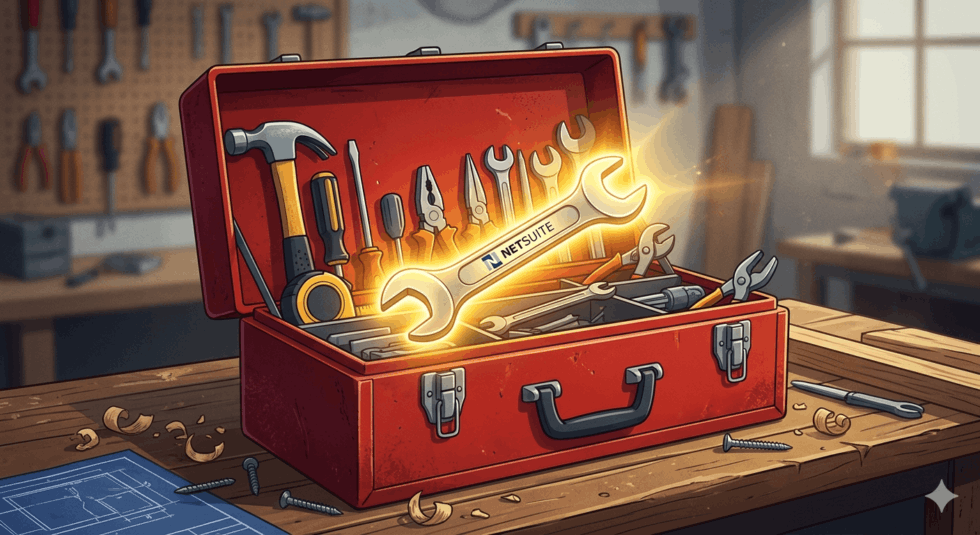
What a digital helper does for you:
- Remembers Everything: It never forgets an order or a customer’s name.
- Does the Math: It calculates your profit so you don’t have to.
- Speaks to Everyone: It tells the warehouse when the office makes a sale.
- Warns You: It tells you if you are running out of materials before it’s too late.
| Traditional Paper Files | The Digital Assistant |
| Can get lost or dirty. | Saved safely in the “cloud.” |
| Only one person can read them. | The whole team can see the info. |
| Hard to search for info. | Find anything in one second. |
| Static and silent. | Sends alerts and reminders. |
Picking the right software is a very exciting moment. It is the point where your factory goes from “doing okay” to “becoming a superstar.” With a tool like NetSuite, you have the power of a giant company right in your hands.
5. Testing and Taking Flight
The final step is the most exciting one. It is called the Go-Live. The Go-Live is the official moment when you stop using your old way of working and start using your new plan and system. It is like the grand opening of a new park. Everyone is invited, and there is a lot of excitement in the air.
Before the Go-Live, you should do a few “practice runs.” This is like a dress rehearsal for a play. You pretend to make an order and see if the system works perfectly. If there is a small mistake, you fix it calmly. Once you feel confident, you pick a date, gather the team, and flip the switch!
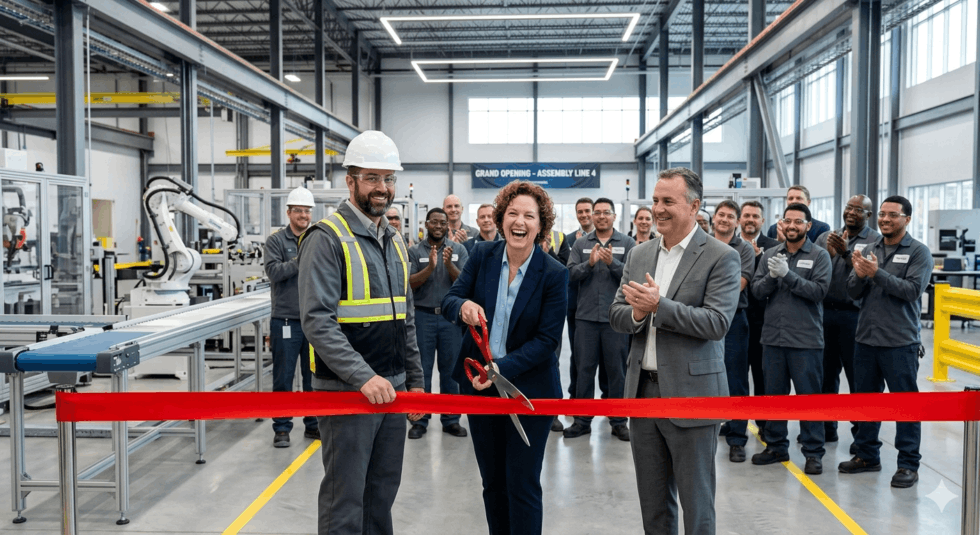
How to have a successful “Launch Day”:
- Celebrate: Bring some treats and say “Thank you” to your team.
- Stay Patient: Remember that it takes a few days to get used to a new routine.
- Ask for Help: If you have a question, your NetSuite partners are there for you.
- Watch the Numbers: Look at your dashboard and see the success start to happen.
Your Final Checklist for Success:
- Objective: Is the goal clear?
- Team: Is everyone smiling and ready?
- Workflow: Is the map simple and fast?
- System: Is the software ready to help?
- Heart: Are you ready to lead with kindness and pride?
Taking flight with a new plan is a brave and wonderful move. It shows that you are a leader who cares about the future. By following these five steps, you have built a factory that is ready for epic growth. Your journey to success has officially begun, and the sky is the limit!